
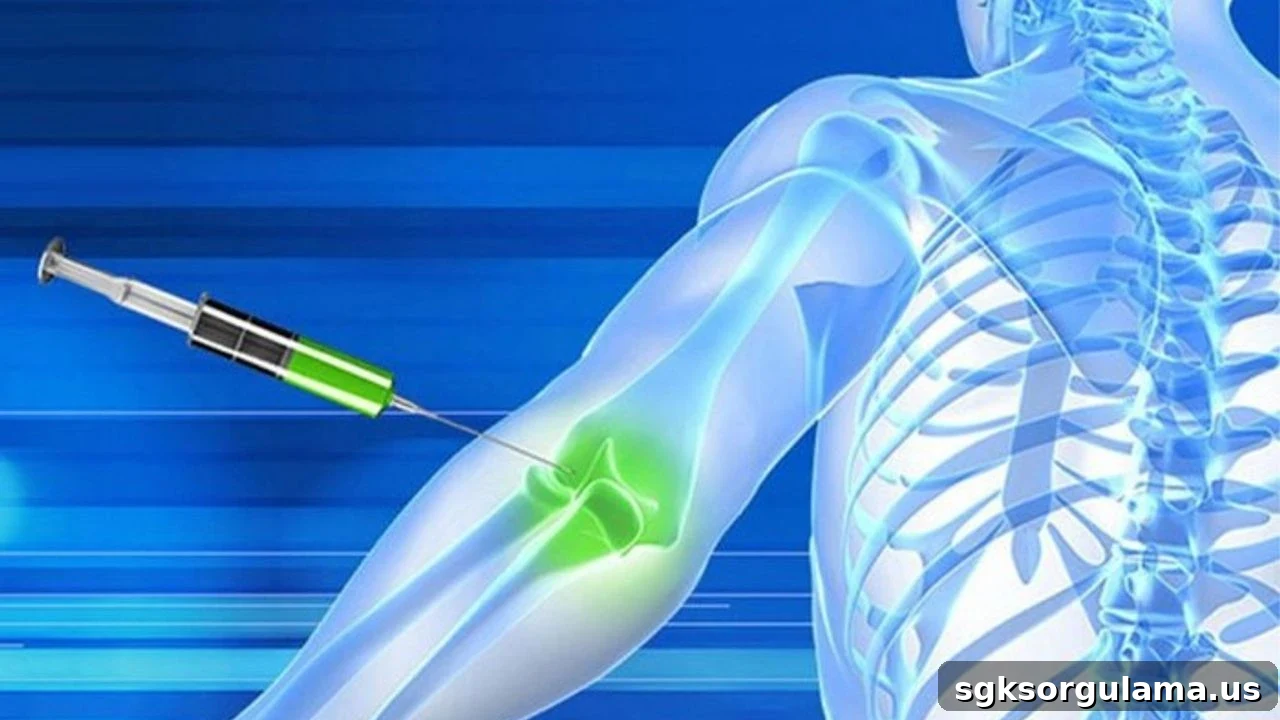
Prolotherapy is an injection-based complementary treatment used for musculoskeletal conditions. The primary goal of the therapy is to stimulate the body’s own healing mechanisms by activating weakened or damaged connective tissues, tendons, and joint capsules.
The solutions used in prolotherapy are intended to trigger a controlled healing response in the tissue. It is often chosen by patients with persistent pain that has not resolved, recurring joint problems, or those seeking non-surgical alternatives.
How Does Prolotherapy Work?
A prolotherapy injection produces a mild tissue reaction at the application site. As a result:
-
Collagen production increases
-
Ligaments and tendons strengthen
-
Joint stability improves
-
Chronic pain can decrease
What Conditions Are Treated with Prolotherapy?
| Application Area | Treated Conditions |
|---|---|
| Knee joint | Osteoarthritis, ligament laxity, meniscal strain |
| Lower back and neck | Low back pain, neck pain, disc degeneration |
| Shoulder | Frozen shoulder, tendon injuries |
| Hip | Hip pain, joint instability |
| Ankle | Chronic pain after sprain, ligament weakness |
Is Prolotherapy Covered by SGK?
The clearest answer as of 2026 to the question “Does SGK cover prolotherapy?” is:
The Social Security Institution (SGK) does not include prolotherapy in routine reimbursement.
This is because prolotherapy is not recognized as a standard treatment method under the SGK Health Application Communiqué.
Why Doesn’t SGK Cover Prolotherapy?
For SGK to reimburse a therapy, several core criteria must be met:
-
Inclusion in standard treatment protocols
-
Clearly defined in the SUT (Health Application Communiqué) list
-
Existence of a reimbursement code
-
Official acceptance of its scientific effectiveness
Because prolotherapy is classified as a complementary and alternative treatment by SGK, it does not meet these criteria.
Prolotherapy Under Current SGK Regulations (2026)
Status in the Health Application Communiqué
| Review Criterion | Current Status |
|---|---|
| Clear definition in SUT | Not present |
| Reimbursement code | Not present |
| Routine SGK payment | Not paid |
| Considered experimental | Yes |
| Exceptional reimbursement | Very limited |
Comparison with Treatments Covered by SGK
| Treatment Type | SGK Coverage Status |
|---|---|
| Physical therapy applications | Covered |
| Cortisone injections | Covered |
| PRP therapy | Not covered |
| Prolotherapy | Not covered |
| Ozone therapy | Not covered |
In Which Situations Might Prolotherapy Be Indirectly Covered by SGK?
Although prolotherapy itself is not reimbursed, some procedures performed during the treatment process may be covered by SGK.
Procedures SGK May Cover
-
Examinations at state hospitals
-
MRI, X-ray and ultrasound imaging
-
Blood tests and laboratory analyses
-
Diagnostic procedures
These diagnostic and evaluation services may be paid by SGK, but the prolotherapy injection fee is generally paid by the patient.
Is Prolotherapy Offered in State Hospitals?
Prolotherapy in state hospitals is very limited. In most public hospitals, this treatment is not part of routine services.
Comparison: Public vs Private Hospitals
| Criteria | State Hospital | Private Hospital |
|---|---|---|
| Prolotherapy availability | Very limited | Widespread |
| SGK payment | None | None |
| Appointment wait time | Long | Short |
| Session fees | Not applicable | High |
Prolotherapy Fees — Updated 2026 List
Prolotherapy prices vary depending on the treatment area, the number of sessions, and the physician’s experience.
Typical Session Fees
| Application Area | Average Session Fee |
|---|---|
| Knee prolotherapy | 3,000 – 6,000 TL |
| Lower back prolotherapy | 4,000 – 7,000 TL |
| Neck prolotherapy | 4,000 – 7,500 TL |
| Shoulder prolotherapy | 3,500 – 6,500 TL |
| Hip prolotherapy | 4,500 – 8,000 TL |
Average Number of Sessions
| Condition Severity | Number of Sessions |
|---|---|
| Mild ligament injury | 2 – 3 |
| Moderate pain | 3 – 5 |
| Chronic problems | 5 – 7 |
Differences Between Prolotherapy and PRP
| Comparison Criteria | Prolotherapy | PRP |
|---|---|---|
| Substance used | Dextrose-based solution | Patient’s own blood |
| Purpose | Strengthen ligaments and tendons | Cellular regeneration |
| SGK coverage | None | None |
| Number of sessions | Generally more | Generally fewer |
| Application area | Ligaments and joints | Joints and muscles |
Who Is Not a Candidate for Prolotherapy?
-
Pregnant individuals
-
Patients with bleeding disorders
-
Those with active infection
-
Advanced-stage rheumatic disease patients
-
Uncontrolled diabetes patients
Post-Prolotherapy Recovery Process
The recovery timeline after prolotherapy varies by person and application site.
| Timeframe | Expected Condition |
|---|---|
| First days | Increased tenderness and temporary pain flare |
| 2–4 weeks | Tissue strengthening |
| 6–8 weeks | Noticeable reduction in pain |
Frequently Asked Questions
Is prolotherapy covered by SGK?
No. As of 2026, prolotherapy is not included in SGK reimbursement.
Is it possible to receive prolotherapy in a state hospital?
It is offered in a very limited number of centers and is not widely available in public hospitals.
Does prolotherapy provide a permanent solution?
It can provide long-term relief depending on the individual and the severity of the condition.
Are there SGK-covered alternatives to prolotherapy?
Yes. Physical therapy and certain injection treatments are covered by SGK.
Why are prolotherapy fees high?
Costs increase due to the number of sessions required, the need for specialist expertise, and material expenses.