
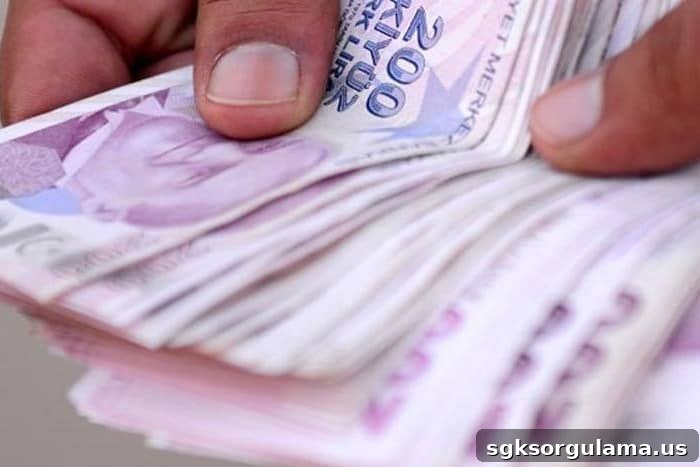
Recently there has been a significant rise in informal employment, with a large share of those working off the books being retirees. Many retirees choose to suspend their pension payments to work and try to increase their future pension, but this approach often backfires and creates financial losses.
Informal Work Harms Retirees
Because of difficult living conditions in Turkey, hundreds of thousands of retirees continue working despite having pension status. Most do so without formal insurance; only a small portion are officially insured. Retirees who fall under SSK 4A, Bağkur 4B, or Emekli Sandığı 4C can continue working in 4A status without suspending their pension, but they are required to pay the Social Security Support Contribution (Sosyal Güvenlik Destek Primi). That contribution is calculated as 32% of the gross wage earned while working, consisting of 7.5 points from the worker and 24.5 points from the employer.
The Social Security Support Contribution paid by those who continue to receive their pension does not increase the pension amount. Therefore, continuing to work under this arrangement does not raise the retiree’s pension. By contrast, retirees who suspend their pension and work normally continue to pay standard social security premiums. When they stop working and reapply for pension, their new pension is recalculated based on the premiums recorded during the resumed contribution period. Depending on the length of work and declared earnings, a higher pension is possible—but there are important downsides to consider.
Suspending the Pension Often Causes Losses
Although many assume suspending pension payments and contributing again will lead to a higher pension, suspending the pension usually results in income loss. For example, a retiree receiving a 2,000-lira monthly pension who suspends payments for three years will lose roughly 72,000 lira in total pension income over that period. If, after three years, the recalculated pension increases by 150 lira per month, it would take 40 years to recoup the lost income. Even if the pension rises by 500 lira per month after reactivation, recovering the missed income would still require about 12 years.
Because of this, anyone considering suspending their pension to increase future payments should run careful calculations. If the earnings reported to the Social Security Institution (SGK) as the basis for premiums after retirement are low, suspending the pension provides little or no advantage. For a rough estimate: with a gross monthly wage of 3,000 lira and three years of contributions, the pension would rise by approximately 6% over those three years—about 180 lira in total increase. If the gross wage is 10,000 lira, the three-year contribution period would yield only a 600-lira increase.
Risks for Employers
Similarly, employing a retired worker off the books poses significant legal and financial risks for employers. Some employers attempt to persuade retirees to work without insurance, arguing there is no benefit for the retiree. However, even if contributions paid while receiving the Social Security Support Contribution do not increase the pension, there are benefits for retired workers who are formally declared and covered.
First, those working under the Social Security Support Contribution remain entitled to coverage for occupational accidents and occupational diseases. Second, formal employment affects rights such as notice pay and severance pay.
Work accident and occupational disease coverage provides temporary daily incapacity benefits during periods of temporary disability, and if permanent loss of earning capacity occurs, a permanent disability pension may be granted. If a retired worker dies as the result of a workplace accident, dependents may receive survivor benefits, and daughters may be eligible for marriage allowance where applicable.