
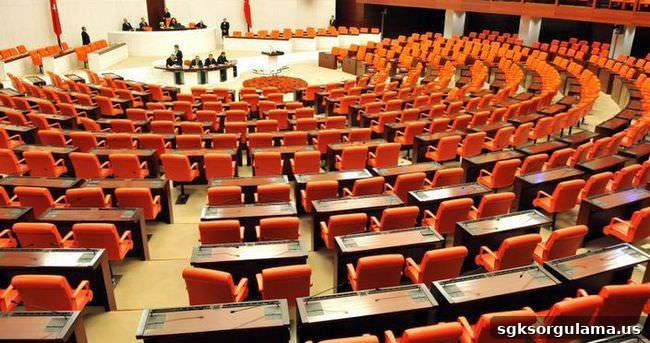
In our country, individuals can run for member of parliament either through political parties or as independents. As long as they meet the required qualifications, candidates may stand for election under any party. The question of who may serve as a member of parliament is important.
A member of parliament is a person who, following elections, earns the right to represent the province in which they stood in the Grand National Assembly of Turkey. Although a candidate stands for election in a specific province, once elected they represent not only that province but the entire nation. The qualifications for becoming a member of parliament are set out in the constitution. Based on those provisions, the main requirements are as follows:
- The candidate must be a citizen of the Republic of Turkey.
- The candidate must be at least 25 years old.
- The candidate’s minimum education level is primary school graduate.
- The candidate must have completed their military service.
- The candidate must not be banned from public service.
- Except for negligent offenses, the candidate must not have served a prison sentence of more than one year.
- The candidate must not have committed an act that brings dishonor to their reputation.
- The candidate must not be guilty of revealing state secrets.
- The candidate must not have participated in ideological or anarchic crimes.
- If the candidate occupies a public office, they must resign from that position in order to run for parliament.
There are two main types of candidacy for parliament in our country. One is nomination by a political party. Citizens who meet the requirements may apply for candidacy from any party they choose. The other route is running as an independent candidate.
Those who wish to be nominated by a political party typically apply to that party’s organization to register as a nomination candidate. Parties usually set a fee for nomination applications; exemptions may be provided for women and disabled applicants. Candidates must also submit required documents along with the fee. After the paperwork is reviewed and accepted, the candidate moves closer to final nomination.
Procedures for selecting parliamentary candidates vary between parties. Some parties choose candidates via primaries, while others rely on party boards or leaders. These selection methods produce a ranking of candidates, indicating which individuals are more likely to be nominated. Because of this ranking, promotional activities during the campaign period are important.
In addition to party-affiliated candidacy, anyone who does not identify with a political party or does not support the views promoted by parties may run as an independent candidate.
Independent candidates apply to the Provincial Election Board of the province where they intend to stand. If the application is approved, the candidate is announced by the Supreme Election Council.
Another stage in the election process is the publication of provisional candidate lists by the Supreme Election Council. Once these lists are published, candidates begin promotional activities such as advertising and rallies.
After elections, successful candidates receive their certificates of election and register with the parliament. Once they receive their badges, they begin their duties as members of parliament.
Who Cannot Be Elected as a Member of Parliament?
The qualifications for who can be elected were outlined above. There are also specific categories of people who are ineligible to be elected as members of parliament. Those who cannot be elected include:
- Individuals who have not completed at least primary school.
- People under legal restriction (those declared legally incapacitated).
- Those who have not completed required military service.
- Persons banned from public service.
- Those sentenced to one year or more in prison, or to heavy imprisonment regardless of duration, except for negligent offenses.
- Certain convicted persons within specific categories and those convicted of terrorist acts, even if later pardoned, are also ineligible.