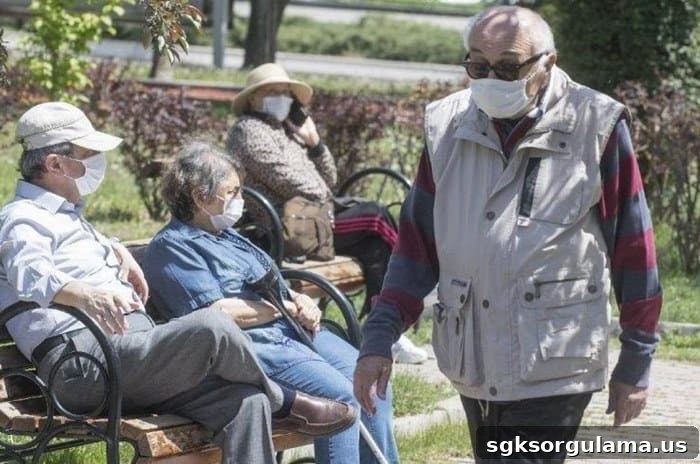
Weekly two-day outings for citizens aged 65 and over! Although the Scientific Committee has not yet approved lifting the curfew for citizens aged 65 and older, work is underway on a new plan that would allow them to spend slightly more time outside: a twice-weekly street allowance. The goal is to transition from the current restrictions so that the twice-weekly permissions are in place for a limited period and the curfew is fully lifted by the end of June.
The eagerly awaited announcement after the Scientific Committee meeting has not yet arrived for seniors. While the expected decision is still pending, authorities are preparing an alternative arrangement for the 65+ age group, who have been heavily affected by the stay-at-home rules. During the Central Decision and Executive Board (MYK) meeting chaired by President Recep Tayyip Erdoğan, he emphasized that “our elders are very valuable to us” and noted their higher risk of contracting the coronavirus. For this reason, special attention is being given to those in the risk group. President Erdoğan reiterated the importance of seniors staying at home and outlined the new measures being prepared for them.
What Are the New Measures for Citizens Aged 65 and Over?
What are the new measures for citizens aged 65 and over? President Recep Tayyip Erdoğan announced the planned changes for this group as follows: the weekly outdoor allowance for people aged 65 and over will be increased to two days per week, and this temporary arrangement is planned to be phased out completely by the end of June. The objective is to end the curfew for this age group by July 1, 2020.
Currently, seniors have been allowed out one day per week under the existing restrictions. Under the new plan, that allowance would increase to two days each week. One of those days would be designated for weekdays so that older citizens can conduct essential errands such as banking and bill payments while gradually returning to normal activities. If cases among the 65+ group do not increase, authorities plan to lift the restrictions entirely.
This step aims to balance protection and mobility: maintaining care for a high-risk population while easing isolation measures in a controlled, phased way. The policy emphasizes monitoring infection trends closely; should the situation remain stable, the temporary two-day rule will serve as a bridge toward full normalization for seniors.