
To benefit from the disability tax deduction, an application must be submitted. The disability tax deduction reduces a portion of income tax for eligible employees. Certain taxes are withheld from each worker’s salary, and if the worker is disabled, a tax reduction may apply to income tax. To qualify, the disabled person must have lost at least 40% of their working capacity. Even if the applicant is not retired, they can claim the deduction if they are responsible for caring for a disabled dependent.
It is important that the applicant is employed and insured. During the application process, proof of employment is required. The degree of disability determines the deduction. According to health reports, those with 40–59% disability are considered third-degree, 60–79% second-degree, and 80% or higher first-degree. The higher the disability rate, the greater the tax deduction.
Who Can Benefit from the Disability Tax Deduction?
Beneficiaries of the tax deduction must be disabled themselves or be responsible for a disabled dependent. The disability tax deduction reduces the amount of income tax withheld from the salaries of disabled workers. Only employees whose salaries are subject to income tax withholding can apply. Sailors or workers employed abroad on construction projects cannot request this deduction.
Those eligible for the tax deduction include:
- Wage earners with 40% or more disability
- Wage earners who have a disabled dependent they are responsible for
- Self-employed persons who are disabled
- Self-employed persons who have a disabled dependent they are responsible for
- Disabled workers taxed under the simplified tax regime
How Much Is the Disability Tax Deduction?
The amount of the disability tax deduction is updated annually, typically effective from January. Insured employees who are disabled or insured employees whose spouse or child is disabled can benefit from this deduction. After applying at the tax office, the deduction is applied to the salary.
The deduction amount is primarily determined by the disability rate. A 40–59% disability qualifies for third-degree deduction, 60–79% for second-degree, and 80% and above for first-degree. The amount deducted from salary varies by degree, resulting in a higher net pay for the beneficiary.
Current disability deduction amounts are as follows:
| Disability Degree | Amount |
| 1st Degree (80% and above) | 2,000 TL |
| 2nd Degree (60%–79%) | 1,170 TL |
| 3rd Degree (40%–59%) | 500 TL |
Where to Apply for the Disability Tax Deduction?
The disability tax deduction application becomes effective after submission and review. Applicants must present the required documents to the appropriate offices. If required, the applicant will be referred to a medical board to obtain a health committee report. If the applicant already has a valid health report, it may be used during the application.
You can apply by petition to the following institutions:
- Group Directorates in provinces that have a Tax Office Directorate
- Revenue Directorates (Defterdarlık) in provinces without a Tax Office Directorate
- Tax Office Directorates in districts with independent tax offices
- Revenue offices (Mal Müdürlükleri) in districts without tax offices
What Documents Are Required for the Disability Tax Deduction?
Collect the necessary documents before applying for the disability tax deduction. Applications submitted to Group Directorates of the Tax Office Directorate typically require a petition. A health committee report is an essential document. After the required documents are submitted, the application is evaluated and, if approved, the deduction is applied.
Required documents during application include:
- A photocopy of the Turkish Republic ID (T.C.)
- A completed application form or written petition
- Proof of employment from the workplace, signed and stamped by the employer
- The original or notarized copy of a valid health committee report; a certified copy of a previously issued but still valid report is also acceptable
How to Check the Disability Tax Deduction Status?
You can check the status of your disability tax deduction to learn the result of your application. The outcome is communicated to the workplace by mail or can be checked online. Insured workers with 40% or more disability are eligible for the deduction. After completing the application procedures, you can check the status online.
Methods to check the application status include:
- E-Government (E-Devlet): Log into E-Devlet with your T.C. ID number and password and navigate to the Revenue Administration (Gelir İdaresi Başkanlığı) page to check the status.
- EVIS (Disability Tax Deduction Inquiry Service): Use the service by entering the required information to perform the inquiry.
- Phone Call: You may contact your local tax office by phone to learn the result.
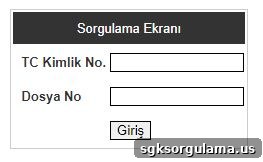
When Will the Disability Tax Deduction Be Finalized?
The outcome of the disability tax deduction application is not immediate. Submitted applications are evaluated and may take about three months on average. There is no exact guaranteed timeline for when the applicant or their guardian will receive the result. The decision on the disability tax deduction is sent by mail to the employee’s workplace.
Once the employer receives the notification, they must take the necessary steps. If the employer fails to act, a complaint can be filed. You can also monitor the result online after applying by using available inquiry systems.
From Which Date Does the Disability Deduction Apply?
The start date for the deduction depends on the date the health committee report is issued. Applicants are referred to the Central Health Committee to obtain a report. If the report and conditions are in order, the deduction is applied from the report date. In some cases, applicants may already have a valid disability report that can be used for the application.
If a previously issued valid report is submitted, it will be reviewed by the health committee. If the committee approves the existing report, the deduction will be granted. The applicant can benefit from the deduction from the application date once the necessary procedures are complete. A written document confirming eligibility is issued and should be given to the employer to apply the deduction to the payroll.
How to Appeal a Disability Report?
To appeal a disability report, the disabled person, their guardian, or the requesting institution must submit an appeal petition. Some applicants may dispute the degree assigned by the health committee, or individuals deemed not disabled may claim an error. The person concerned must file a written appeal.
Applicants can submit a certified copy of the initial health committee report to provincial health directorates. The provincial health directorate may refer the person to a different hospital for reassessment. If the second report confirms the first, the disability determination becomes final and further appeals are not available, although legal action can be pursued. If the two reports differ, the person will be sent to the nearest arbitration hospital for a final examination; that hospital’s decision is binding. An appeal for further review of the Central Health Committee decision may also be possible.

When Are Previously Issued Reports Valid?
If a previously issued report remains valid, it may be submitted with the application. A certified copy of the valid report should be included with the petition. It is not mandatory to have a report at the time of application because applicants are usually referred to the Health Committee for assessment after applying. However, reports issued for other purposes and not evaluated by the Central Health Committee are not accepted for the tax deduction.
If a report was issued following a referral from another institution, it may be accepted provided the original or notarized copy is presented. A certified copy from the issuing hospital is also accepted. Acceptance depends on compliance with relevant regulations governing disability criteria, classification, and the format of health committee reports.
The application and accompanying report must conform to the prescribed report format. Submitted documents are forwarded to the Revenue Administration Central Health Committee for evaluation. If the committee finds the applicant eligible, the tax deduction is granted.
What Are the Conditions for a Caregiver to Benefit from the Deduction?
When the applicant is not disabled but is responsible for a disabled person, additional documents may be required alongside the standard application materials. The caregiver must demonstrate the legal obligation to care for the disabled person.
Conditions for dependents to qualify include:
- Dependents recognized under social security law are also valid for the disability tax deduction.
- The deduction applies only to salary-based income withholding.
- Tax withholding covers additional payments and the total salary subject to withholding.
- The deduction is not applicable for retirement calculations.
- The caregiver must provide documentation proving responsibility for the disabled person, obtainable from the local Social Security Institution office.
- Photocopies of the T.C. ID cards of both the insured worker and the disabled dependent are required.
Can Beneficiaries of the Disability Tax Deduction Receive the Allowance for Minimum Living (AGİ)?
Yes, recipients of the disability tax deduction can also receive the Allowance for Minimum Living (AGİ). AGİ provides a minimum living allowance and does not prevent receiving a disability tax deduction. Both are calculated under specific conditions. A disabled person can receive AGİ for themselves, but a non-disabled person cannot claim AGİ on behalf of another. If a non-disabled caregiver benefits from the disabled dependent’s tax deduction, the caregiver cannot claim AGİ for that dependent.