
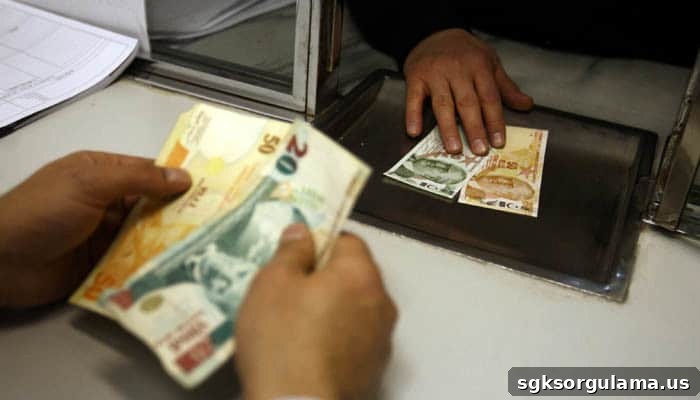
Good news for those with retirement accounts! From now on, people who have paid higher contributions for retirement will no longer receive low pensions. Those who paid more contributions will see their pensions increase. One of the main reasons for shortfalls in the Social Security Institution (SGK) is citizens opting for early retirement. A new proposal has been introduced to discourage that trend. The proposal states that the more you work and contribute, the higher your retirement pension will be. Another aim is to restore balance between revenues and expenditures, and related incentive programs are being developed to achieve this.
According to the proposal, as a person’s working period lengthens, their monthly pension accrual rate will also rise. The plan envisions a repayment and benefit system that takes medical and economic evaluations into account. For those who do not fall under the repayment scope, incentives for complementary health insurance will be offered.
What pushed the government to pursue these incentives was the growing annual shortfall in health coverage costs. An imbalance was identified in the SSK system: revenues are not covering expenditures. The rise in early retirements and higher pension accrual rates has contributed to an increase in the social security deficit.
How Will Calculations Be Made?
Pension amounts will be calculated by taking into account the number of contribution days and the total contributions paid. Under the current system, differences among retirement schemes mean that people who paid high contributions sometimes end up receiving the same pension as those who paid much less. Likewise, someone who retired after contributing based on a higher salary could receive a similar pension to someone who contributed based on the minimum wage. Those inequities are the basis for moving forward with this new approach.