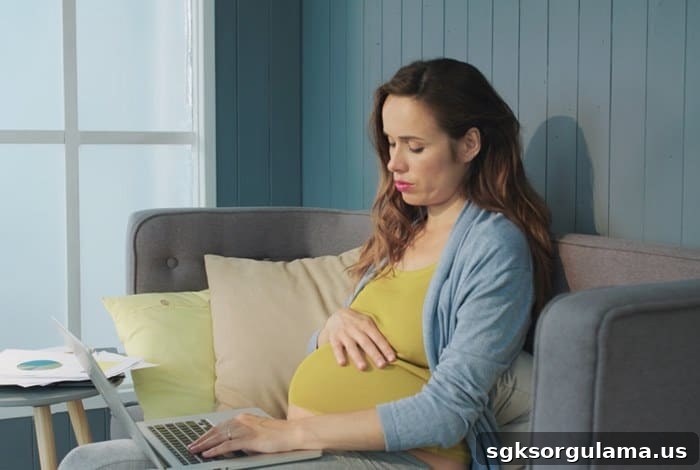
Legislation defines the rights and working conditions of pregnant and recently postpartum female employees. These rules guarantee under which conditions and for how many hours per day pregnant and breastfeeding women may work.
Rights of Pregnant and Postpartum Employees
The legal framework secures the working conditions for pregnant or recently postpartum female employees. To benefit from these protections, pregnant workers must inform their employer and present medical documentation from a healthcare provider. Once the employer receives the medical report, the required measures must be implemented. From that date, the employer must take appropriate health precautions for pregnant or breastfeeding employees, ensuring they are not exposed to hazardous chemical, physical, or biological agents. The employer is also required to address psychosocial and medical factors that may affect the employee.
If the employer determines that health or safety risks exist for a pregnant or breastfeeding employee, they must change the working conditions or hours. Under a medical report, a pregnant worker should be reassigned to lighter duties appropriate to her health when necessary. Any such reassignment must not result in a pay reduction. If no suitable light work is available at the workplace, the employer must grant unpaid leave.
Working Hours for Pregnant Women
Regulations protect the working hours of pregnant women. Once pregnancy is confirmed by a medical report, a pregnant employee may not be scheduled to work between 8:00 PM and 6:00 AM until delivery, regardless of how many weeks pregnant she is. This prohibition applies across sectors, not only in factories. Employers may not require pregnant employees to work hours that cover the majority of this period (for example, a shift from 6:00 PM to 1:00 AM would be disallowed).
The law also prohibits night work for women who have recently given birth for one year following delivery. After that one-year period, night work may still be restricted if a medical report indicates it would be harmful; the restriction then continues for the period specified in the report. Daily working hours for pregnant and breastfeeding women are capped and should not exceed 7.5 hours under these protections.
Periods When Women Are Not to Be Employed Before and After Birth
The total duration during which a woman is not required to work for reasons related to childbirth is 16 weeks: eight weeks before and eight weeks after delivery. In the case of multiple pregnancy, an additional two weeks are added to the prenatal nonworking period. If a woman’s health permits and she requests it, a doctor may allow her to work up to three weeks before the expected delivery date; any unused prenatal leave then transfers to the postnatal period. Employers cannot shorten these maternity leave periods.
If the mother dies during childbirth or afterward and the child survives, any unused maternity leave is transferable to the father regardless of his employer. Similarly, a spouse who adopts a child under three years old is entitled to eight weeks of maternity leave effective from the date the child is placed with the family. Employers who deny these leaves face sanctions and fines from social security authorities, and affected employees may claim compensation or leave their jobs with cause.