
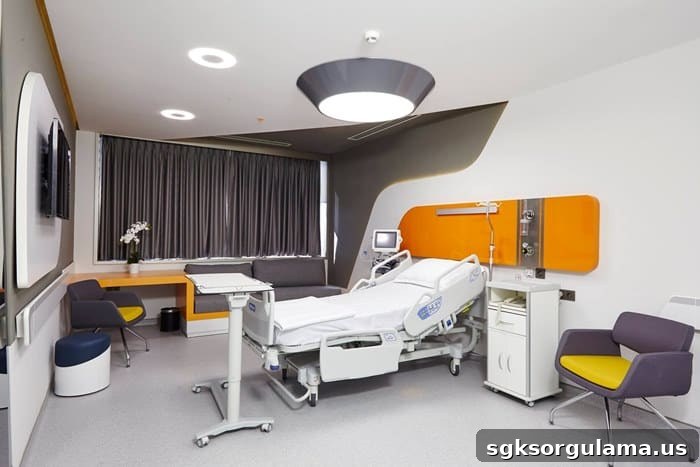
Do private hospitals charge for emergency department services? This question is one of the most common concerns for people facing sudden health needs. Emergency care requires rapid intervention for life-threatening conditions, so whether it is free is very important. Turkey’s healthcare system includes specific legal provisions on this topic and applies different rules for emergency services.
Whether private hospitals can charge for emergency department visits depends on the urgency of the condition, the patient’s social insurance status, and the scope of required procedures. Rights for individuals covered by SGK (Social Security Institution) are clearly defined in many cases. Nonetheless, there are instances in some private hospitals where, following an assessment that a condition is not urgent, a fee is requested from the patient.
Which Conditions Fall Under Emergency Care?
The emergency department is the hospital unit that provides rapid intervention for sudden, life-threatening health problems. These departments operate around the clock and prioritize patients based on medical urgency. Prompt intervention is crucial for cases such as heart attack, stroke, and severe breathing difficulties.
Health Problems Considered Emergencies
- Loss of consciousness, altered mental status, fainting,
- Heart attack, chest pain, cardiac arrhythmia,
- Respiratory arrest or severe breathing difficulty,
- Stroke (sudden paralysis), sudden loss of vision or speech,
- Severe bleeding, trauma, internal organ injuries,
- Sudden severe abdominal pain, poisoning,
- Mental health emergencies (such as suicide attempt),
- Severe burns and electric shock,
- Bleeding during pregnancy or threatened miscarriage.
The situations listed above qualify as “emergency health services.” In such cases, all healthcare institutions, including private hospitals, are obliged to accept and treat the patient. Regardless of whether the patient has social insurance, the primary goal is to save the person’s life.
How Do Emergency Services Work in Private Hospitals?
Emergency services in private hospitals differ in some respects from public hospitals. However, under Law No. 5510 on Social Insurances and General Health Insurance, private hospitals are also required to accept patients who need emergency intervention. These services must be provided free of charge at private hospitals that have agreements with SGK.
Steps in Emergency Department Workflow
- The patient presents to the private hospital’s emergency unit.
- An initial assessment is performed and the complaint is recorded.
- A physician determines whether the case is an “emergency.”
- If an emergency is identified, the treatment is free of charge.
- If the condition is not urgent, the patient may be referred to outpatient clinics.
Practice in SGK-Contracted Hospitals
- Private hospitals contracted with SGK cannot charge for emergency interventions.
- Initial examination, tests, and treatments are covered by SGK.
- If hospitalization is required, costs remain covered as long as the case continues to be considered emergency care.
If, after evaluation, the patient’s condition is not deemed an emergency, the private hospital has the right to request payment. In that case, the patient is informed and, with consent, directed to a paid examination or treatment.
In Which Situations No Fee Is Charged?
Emergency services at private hospitals must be provided free of charge in certain clearly specified situations. The Ministry of Health and SGK define these scenarios. According to Article 60 of Law No. 5510 and related regulations, private hospitals are required to provide free services for conditions considered within the scope of emergency care.
Situations Where Fees Cannot Be Charged
- Patients who present to the emergency department and are assessed as emergency cases,
- Mandatory situations covered by SGK, such as traffic and workplace accidents,
- Life-threatening conditions like fainting, heart attack, shock, stroke,
- Sudden bleeding or threatened miscarriage during pregnancy,
- Psychiatric emergencies such as acute mental crises or suicide attempts,
- Forensic cases (assault, sexual assault, poisoning, etc.),
- Patients who present as emergencies and are subsequently referred to another hospital.
Legal Basis
- Law No. 5510 on Social Insurances and General Health Insurance,
- Emergency Health Services Circular No. 2010/16,
- Health Implementation Communiqué (SUT) and related SGK decisions.
For visits that fall outside these emergency criteria, private hospitals may charge fees with the patient’s consent. If a fee is improperly charged during an emergency, the patient can file a complaint with SGK to seek a refund.
Where to Complain If a Private Hospital Charges for Emergency Services?
If a private hospital requests payment for emergency services, this may be against the law—especially for patients covered by SGK when their condition is determined to be an emergency. Citizens who face such situations can pursue remedies and file complaints through several channels.
Complaint Channels
- Call ALO 184, the Ministry of Health’s communication line, to report the complaint.
- Submit a written complaint in person at the provincial SGK directorates.
- File an administrative complaint via the central government portal or relevant complaint mechanisms.
- If an invoice was issued by the hospital, submit the document to SGK as evidence.
- After a complaint is filed, an investigation may be opened and any improperly collected fees can be refunded.
Documents Required for a Complaint
- Invoice or payment receipt issued by the hospital,
- Epicrisis or medical report prepared in the patient’s name,
- Emergency department admission document or physician assessment,
- Copy of ID and written complaint letter.
After reviewing the submission, the authorized institutions can initiate proceedings against the private hospital. If a refund is warranted, the patient will receive reimbursement and the hospital may receive a warning or other sanctions.