
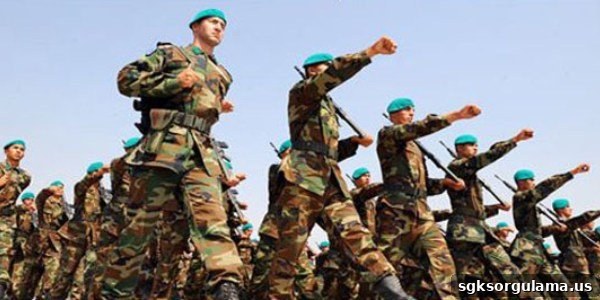
Military service is a duty essential for defending the country, maintaining security, and learning or practicing military arts. Military service is carried out by soldiers. The term “soldier” refers to those who serve as non-commissioned officers or privates, and to personnel affiliated with the Turkish Armed Forces who wear official uniforms under special laws. Historically, military service has held an important place. As the saying goes, “Every Turk is born a soldier,” underscoring the significance of this duty for Turkish citizens.
In our country, military service is compulsory for every young man who reaches the age of 20. This obligation can be deferred to a later age in cases such as ongoing education. In addition to compulsory conscription, there is also paid exemption (bedelli askerlik), where a person can be exempted from service in exchange for a specified fee and thus is not required to serve. Regardless, mandatory service often coincides with certain periods in a person’s working life and may affect the employment timeline of civil servants. Below, you can read how career step progression (kademe ilerlemesi) is handled for those who serve in the military.
Career Progression for Civil Servants Who Go to the Military
When a civil servant goes to the military, their official post remains unchanged and the period they spend in service is treated as unpaid leave. After discharge, civil servants who wish to return to their public service position must apply to the relevant authority within 30 days from the date of discharge. During this 30-day window, institutions are required to reinstate the returning employee. If the person does not notify their institution upon enlistment but later seeks to return to the same civil service position, they still retain the right to return. The time spent in military service should be considered for career step progression based on the grade held at the time they left for service.
Career Progression for Those Who Serve Before Becoming Civil Servants
Whether a person completes military service before or after entering civil service does not change its effect on their official career progression. Article 657 of the Civil Servants Law specifies that periods spent in military service by those appointed to civil service after completing conscription are taken into account for career step progression. Individuals who enter civil service after finishing military duty are subject to probationary conditions; their military service periods are reviewed and may be counted toward step advancement or considered when applying promotion examinations and selection procedures.
The same considerations apply to those who leave civil service, perform military duty, and later return to public employment. When such persons resume civil service, the time spent in the military contributes to determining their accrued months and step and grade levels. This is how military service is treated in relation to career step progression.
Effect of Military Service on a Civil Servant’s Annual Leave
For those who served in the military before entering civil service, or who left civil service to serve and then returned, the time spent in service counts toward the calculation of annual leave entitlement. If military service is performed while a person is already a civil servant, that period is treated as unpaid leave. It is not necessary for the civil servant to have purchased military service credit (askerlik borçlanması) for these periods to be included in annual leave calculations.
Impact of Military Service Time on Retirement
If an individual completed military service before joining the civil service, or serves while in civil service, those periods are not automatically counted toward retirement time. If the person wants the military service period to affect retirement days, they must purchase the service time under the civil servant military service credit (memur asker borçlanması) scheme.
Within civil service, each year of work generally contributes one step (kademe) for the civil servant, and every three years typically result in one grade increase (derece). Considering this rule, when the total of time spent in military service and prior career steps reaches three years, a grade increase may be applied for the civil servant or teacher. If any problem occurs in applying this grade increase, the individual can resolve it by submitting a petition to their institution.