
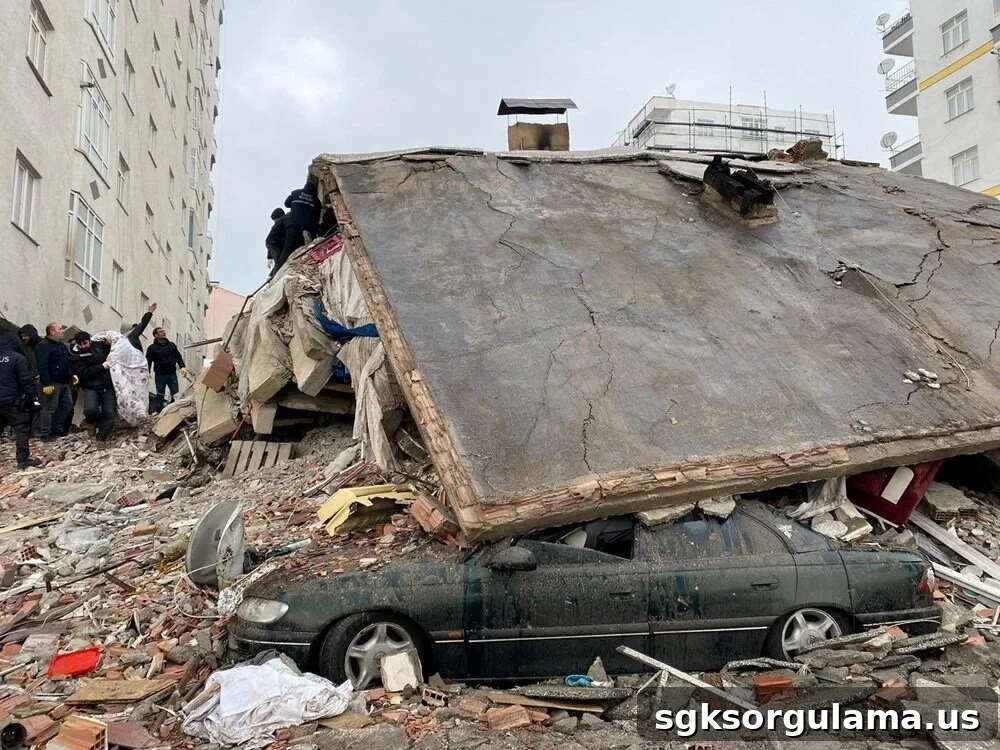
After the devastating earthquakes centered in Kahramanmaraş that were strongly felt across 10 provinces, questions resurfaced about whether those quakes could trigger a major Marmara earthquake. Millions were affected by the powerful tremors that measured above magnitude 7 in the early hours and again around midday. The disaster has left thousands dead and many more trapped under debris, while search and rescue operations continue at full speed.
In the wake of this tragedy, discussions about the likelihood of a Marmara quake have intensified. Experts emphasize that preparedness is essential and urge authorities and the public to take precautionary measures now rather than wait for certainty.
DID THE RECENT QUAKE TRIGGER A MARMARA EARTHQUAKE?
The recent catastrophe prompted renewed speculation about whether the Kahramanmaraş events could have triggered movement on the Marmara segment of the North Anatolian Fault. Professor Dr. Haluk Özener, director of the Kandilli Observatory and Earthquake Research Institute, addressed these claims and provided a scientific perspective.
Özener stated that there is no scientific evidence to support claims that the recent Kahramanmaraş earthquakes have directly triggered a Marmara earthquake. From a tectonic standpoint, although earthquakes can sometimes influence stress distribution on distant faults, the idea that an event on the East Anatolian Fault would directly activate the North Anatolian Fault in the Marmara region is not supported by the current scientific understanding. He also cautioned that unverified assertions tend to spread widely after major quakes and can cause unnecessary alarm.
OFFICIAL RESPONSE TO THE ALLEGATIONS
Following the large earthquakes affecting Kahramanmaraş and many neighboring provinces, Professor Özener warned against giving credence to claims that lack an official or scientific basis. He urged people to rely on information from authorized institutions rather than social media rumors or unconfirmed sources.
Özener reminded the public that the authoritative earthquake institutions in Turkey—such as AFAD and the Kandilli Observatory—provide verified updates and guidance via their official channels. He emphasized that suggestions claiming the Kahramanmaraş quakes will inevitably trigger a Marmara earthquake should not be treated as established fact.
THE TIMING OF A MARMARA EARTHQUAKE REMAINS UNKNOWN
Seismologists consistently point out that precise timing of earthquakes cannot be predicted. While geological and seismic studies can estimate probabilities and identify regions with elevated risk, specifying the exact timing of a large Marmara earthquake is not possible. Experts note that a significant event in the Marmara region could occur in the near future, or it might not happen for several decades—potentially 30 to 40 years. Because of that uncertainty, authorities and residents should focus on preparedness measures now.
Practical steps recommended by specialists include strengthening building resilience, ensuring emergency plans and supplies are in place, and following guidance from official institutions during aftershocks and recovery. Clear, verified communication from responsible agencies helps reduce panic and supports coordinated response and recovery efforts.
In summary, while the recent Kahramanmaraş earthquakes have heightened public concern about seismic activity across Turkey, current scientific assessments do not confirm a direct triggering of a Marmara earthquake. Experts urge vigilance, preparedness, and reliance on credible information sources as the most effective way to reduce risk and protect communities.