
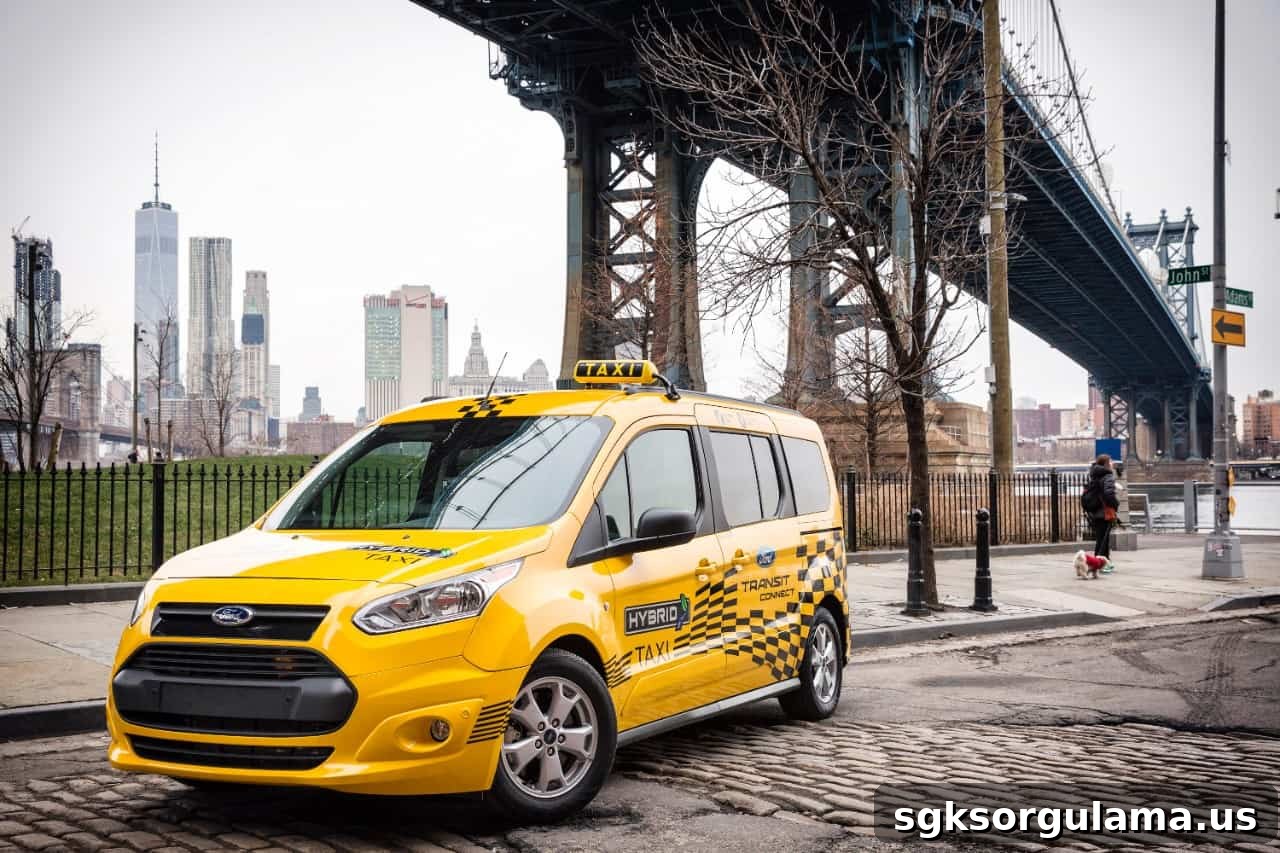
Public transportation and commercial vehicles such as taxis, shared minibuses (dolmuş) and buses play a vital role in moving people within cities. The number of these vehicles and the people who use them continues to grow. For this reason, it is important that commercial drivers understand their social security rights so they can benefit from the social services available to them.
Social Rights Provided to Commercial Drivers
According to trade associations, there are roughly 3,000 taxi stands, 60,000 commercial taxis and nearly 100,000 commercial taxi drivers across Turkey. Despite these large numbers, many commercial drivers are not fully aware of their social rights. Working conditions for those employed in urban commercial transport differ from other professions. Irregular and frequently changing work hours in particular can create a range of challenges.
Many people perform this work as their main profession, while a significant number do it as a secondary job. Part-time drivers are often unaware of the rights they are entitled to. The nature of the job also involves direct interaction with customers and risks such as traffic accidents, where not knowing one’s rights can cause serious problems. Therefore, drivers should become well informed about their social rights.
Rights Granted to Commercial Drivers
Commercial vehicle drivers face a number of social security issues due to the nature of their work. If the worker is the owner of the vehicle, they can be insured under Bağ-Kur (self-employed social security). However, if the vehicle owner does not personally drive the taxi, the driver should be covered under SSK (employment-based social security). In practice, this arrangement is often not consistently applied because the job is frequently irregular and some owners create obstacles to formal employment.
To address the social security of drivers who do not work continuously, a regulation was introduced in 2011. Under this rule, taxi drivers who do not work regularly but work less than 10 days are provided social insurance coverage calculated on the basis of 30 days. According to this provision, the vehicle owner is held responsible for insurance obligations and rights. Despite this, many vehicle owners still hesitate to provide insurance and other social benefits for short-term drivers.
What Can a Driver Do If They Lack Social Benefits?
If a vehicle owner employs a driver without providing any social security and the driver is employed to carry customers (not for the owner’s personal use), the owner is legally required to insure the driver. If the owner fails to do so and a complaint is filed or the situation comes to light, significant penalties can be applied.
If a driver works part-time or fewer than 30 days per month, they must be registered under part-time insurance and must complete any missing contribution days themselves. Drivers working 10 days or fewer must also have insurance and their premiums paid. For these drivers, premium payments are calculated based on a monthly earnings base chosen by the driver between the minimum wage and 7.5 times the minimum wage. The insurance premium rate on that base is 32.5%; if unemployment insurance is also included, the rate rises to 35.5%. Unemployment insurance for drivers who work 30 days per month is paid by the vehicle owner; for those who work fewer than 30 days, paying the unemployment contribution is left to the driver’s discretion. Commercial drivers should pay close attention to their contribution payments and service periods to secure their retirement rights.