
The 2024 SGK child payment amount and application requirements can change from year to year. Currently, the child payment is a one-time cash support paid to each mother. Those who wish to benefit from this assistance can apply through the Ministry of Family and Social Services or via population (civil registry) directorates.
Although the 2024 SGK child payment amount and application conditions may vary annually, this support can be very helpful in covering the costs associated with welcoming a new baby.
What Is SGK Child Payment?
SGK child payment is a financial assistance provided to families with children. The payment is issued by the Ministry of Family and Social Services, offering families and mothers some financial relief. The amount paid varies depending on the child’s birth order: payments for the first child differ from those for subsequent children.
This child payment has been implemented independently of earlier Ministry programs since 2015. The main goal is to ensure that the newborn’s basic needs are met without difficulty. Applicants must meet certain eligibility criteria to receive the payment; otherwise, they may be ineligible.
Applying for SGK Child Assistance
To apply for the SGK child payment, you should complete the process via e-Government (e-Devlet). Visit the official portal at turkiye.gov.tr and sign in with your e-Devlet credentials. You can obtain an e-Devlet password from PTT branches. Access to e-Devlet is also possible using an electronic signature or mobile signature instead of a password.
Applying via e-Devlet for Child Payment
Applying for the child payment through e-Devlet requires following several steps. After signing in, click the “Giriş Yap” (Sign In) option at the right. For children born after 15.05.2015, applications are processed through population directorates and the Ministry of Family and Social Services. To reach the social assistance application screen, type “sosyal yardım” (social assistance) into the search field and then select “Aile ve Sosyal Hizmetler Bakanlığı/Sosyal Yardım Başvuru Hizmeti“.
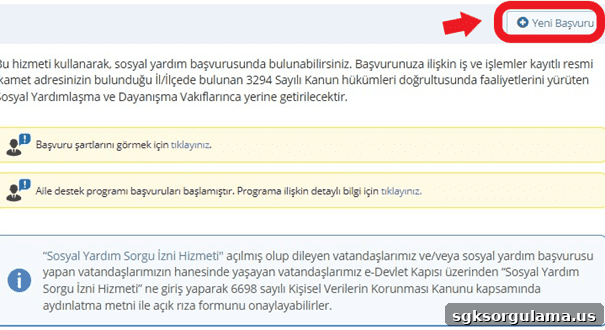
After searching for social assistance, click the “Yeni Başvuru” (New Application) option on the screen that appears.
What Are the Eligibility Conditions for Child Payment?
Eligibility conditions for the child payment are not highly restrictive. There is no income limit to qualify; people from different income groups can receive this payment. The main requirement is that the child must have been born after 15.05.2015. Children born before that date are not eligible for this specific assistance.
The child’s birth date and birth order determine the payment category. For example, if one child was born on 15.05.2016 and another on 15.05.2014, you would receive the payment amount applicable to the second child for the eligible one. Payments for second and third children are higher than for the first.
How Much Is the Child Payment in 2024?
The 2024 child payment amount depends on the child’s birth order. The amounts differ for the first, second and third child, and remain the same for any children beyond the third. The payments are listed as follows:
- First child: 300 TL
- Second child: 400 TL
- Third child: 600 TL
When Is the Child Payment Paid?
The payment timing depends on the application date. Payments are made through PTT by the 25th of the month following the month of application, so you can expect to receive the money within about one month after applying.
Where Is the Child Payment Deposited?
Payments are deposited at PTT. You can verify whether the payment has been deposited by checking via e-Devlet. After signing in, search for PTT in the portal and follow the relevant service for institutional payment inquiries and transfers.
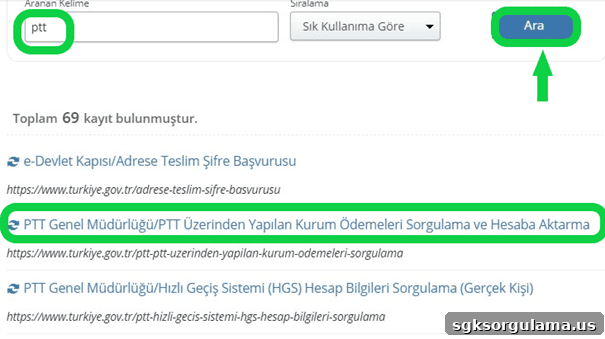
After searching for PTT, select “PTT Genel Müdürlüğü/PTT Üzerinden Yapılan Kurum Ödemeleri Sorgulama ve Hesaba Aktarma” to check whether the institutional payment has been made.
How Many Times Is the Child Payment Made?
The child payment is a single payment. It is provided only once and is deposited to the mother’s account at PTT. Therefore, the mother must be the one to withdraw the money; payments are not made to the father or other relatives.
Other Social Assistance Programs
Beyond the child payment, other social assistance programs are available. By researching these additional supports, you can potentially increase household income. Other programs are often provided based on need, so employed individuals or those with higher incomes may not qualify.
The Ministry of Family and Social Services reviews applicants’ income both through documents and on-site inspections to determine eligibility. If specialists conclude that assistance is appropriate, various supports may be granted.
Conditional Pregnancy Assistance 2024
Conditional pregnancy assistance is included among one-time payments and is provided regardless of whether the baby is born alive. The 2024 conditional pregnancy assistance includes:
- Monthly 200 TL during pregnancy provided that prenatal check-ups are attended regularly,
- A one-time 500 TL payment if the birth takes place in an authorized hospital,
- Two separate payments of 300 TL during the postpartum period, contingent on regular follow-up checks.
Orphan Assistance
Orphan assistance is intended for individuals under 18 who have lost one or both parents. Children who have lost both parents can receive support through their guardians. Applicants should apply to local social solidarity and assistance foundations; if the child has no guardian, relatives can apply on their behalf.
Family Assistance
Family assistance is another form of support provided by the Ministry of Family and Social Services and includes various types of aid.
Some examples of these supports include:
- Assistance after natural disasters
- Support for victims of terrorism
- Coal assistance
- Soup kitchen support
- Pandemic-related assistance
- Support for relatives of martyrs and veterans
- Electricity support for chronic patients
- Bill assistance
When granting these aids, the primary criterion is the per-person household income rather than whether a household member is formally insured.
Conditional Education Assistance
Conditional education assistance is paid to families with school-aged children on the condition that children attend school regularly. A child must not have more than four days of absence per month to remain eligible.
Conditional Child Health Assistance
Conditional health assistance supports children who have difficulty accessing health services. Applicants should not be receiving income or a pension from the Social Security Institution. This assistance is targeted at children aged 0–6 and requires that the child’s health checks and treatments are carried out regularly.
Multiple Birth Assistance
Multiple birth assistance is offered in cases of multiple pregnancies and covers children aged 0–24 months. Applications are made through the Social Solidarity and Assistance Foundation.
| Twin children assistance monthly total | 800.00 TL |
| Triplet children assistance monthly total | 1,200.00 TL |
Child Benefits Provided by SGK
SGK provides child-related benefits such as the nursing (breastfeeding) allowance and temporary incapacity to work allowance. These supports help insured mothers manage the postnatal period without losing income. If need is established, SGK may provide additional payments for multiple births.
- Nursing Allowance
To receive the nursing allowance, a live birth is required. The insured mother or the insured father’s non-insured spouse must have 120 days of retroactive premiums, paid within the last 15 months. Those whose insurance has ended can still qualify if the birth occurs within 300 days of the end of coverage.
- Temporary Incapacity to Work Allowance
The temporary incapacity to work allowance supports insured women before and after childbirth. Assistance is provided for eight weeks before and eight weeks after birth. Pregnant women may work until three weeks before the expected delivery date; in that case, the five-week period prior to birth is added to the postnatal leave. The five-week portion of the temporary incapacity allowance is paid after birth. In multiple pregnancies, these periods are extended by two weeks.
- Leave Rights
Leave rights allow working women to spend more time with their child. Pregnant employees are entitled to time off for medical appointments. Work hours for pregnant and nursing women are limited to 7.5 hours per day. After maternity or adoption leave ends, women may be eligible for part-time work for a period that varies between 60 and 360 days, provided they have 600 days of prior premium payments related to unemployment insurance. After exhausting leave rights, a woman may also request unpaid leave for up to six months.