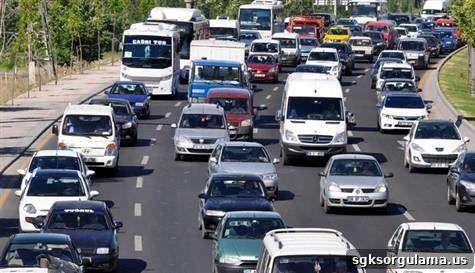
There are thousands of people on the roads in Turkey, and this volume of traffic has a particularly negative impact in large cities. In central cities, which are considered the country’s hubs, traffic often becomes congested or comes to a standstill during certain periods of the day, and vehicles advance only with great difficulty. Journeys that would normally take a short time can stretch into several hours. Drivers who spend large portions of their day stuck in traffic are seriously affected. They constantly worry about whether they will arrive on time when they need to be somewhere. Long waits in difficult conditions take a psychological toll: drivers stuck for extended periods become noticeably more irritable, and small incidents can escalate into violent confrontations, sometimes with fatal outcomes.
As a social state, Turkey has introduced new traffic-related laws to reduce the number of vehicles and drivers and to improve road safety. Many of these laws aim to protect drivers and to deter negligent behavior. Seemingly minor errors in traffic can produce major consequences. To reduce deliberate or careless mistakes, the General Directorate of Security applies substantial fines as a deterrent. One administrative action carried out by the General Directorate is vehicle plate replacement. If you dislike your vehicle’s license plate for any reason, you can change it through the plate replacement process.
Because traffic accidents have increased, additional measures have been introduced for driver licensing and driver education at training schools. These new measures have made it more difficult for people who lack adequate driving ability or attention to obtain a driving license, turning the process into a more phased and stringent procedure. Training at driving schools is now conducted with greater care. Under the new laws, not everyone can obtain a driving license easily; applicants must successfully complete several demanding stages. Recent fee increases for driving schools also make it harder for people who are likely to make driving errors to obtain licenses.
As a result, those who enroll in driving courses tend to be people who are highly motivated and willing to work hard for a license, as well as attentive, capable drivers who are unlikely to make even small mistakes. Any applicant who achieves the required score on the written exam and successfully completes practical driving lessons becomes eligible for a driving license. After obtaining a license, an individual who wishes to change the license plate of their vehicle may apply for plate replacement. Plate replacement is optional. Successful license applicants must prepare certain documents and submit them to the General Directorate of Security at the scheduled appointment time booked online. The plate replacement procedure requires preparation and submission of specific documents as well.
To obtain a driving license, applicants must prepare and submit several documents to the General Directorate of Security. These typically include an identity card, passport (or an attorney identification card for lawyers used in official matters), the driver’s file from the drivers’ chamber, a medical report, two biometric passport photos (5×6 cm) with a white background, and a document indicating blood type. In addition to documents, some payments must be made: the license fee, the fee for official documents, and the driver’s license charge are usually paid at authorized banks or tax offices. Once the license is granted, drivers who dislike their vehicle’s plate can apply for a replacement by submitting the required paperwork. After the necessary documents are handed in, the plate replacement is completed within a set period.
How Is Plate Replacement Done?
If you want to change your plate, you must prepare and submit a set of documents. You can apply for a plate change at the time you purchase the vehicle or within about a month afterward. The documents required for plate replacement include the applicant’s identity card and the vehicle’s existing registration document and plate. Mandatory insurance policies must be in place. You also need a transfer file obtained from the Drivers’ Chamber, the notarized sale document for the vehicle and the original and a copy of the temporary registration certificate. If the vehicle has not yet passed inspection, an official record proving that the inspection has been completed is required. In addition, the vehicle must have no outstanding motor vehicle tax (MTV) debt at the time of the plate change.
Plate replacement must be performed within one month of the vehicle’s sale date. First, you must make an appointment at the Traffic Registration Office to which you are registered. Take the vehicle sale contract and registration document to the Drivers’ Chamber to open a transfer file. There you will complete Form Ek-1 for a fee. Then submit all prepared documents to the Traffic Registration Office Directorate. After handing in your documents and the old plate, you will receive a certificate for plate production; with that certificate the plate replacement process is finalized and your new plates can be produced and fitted.