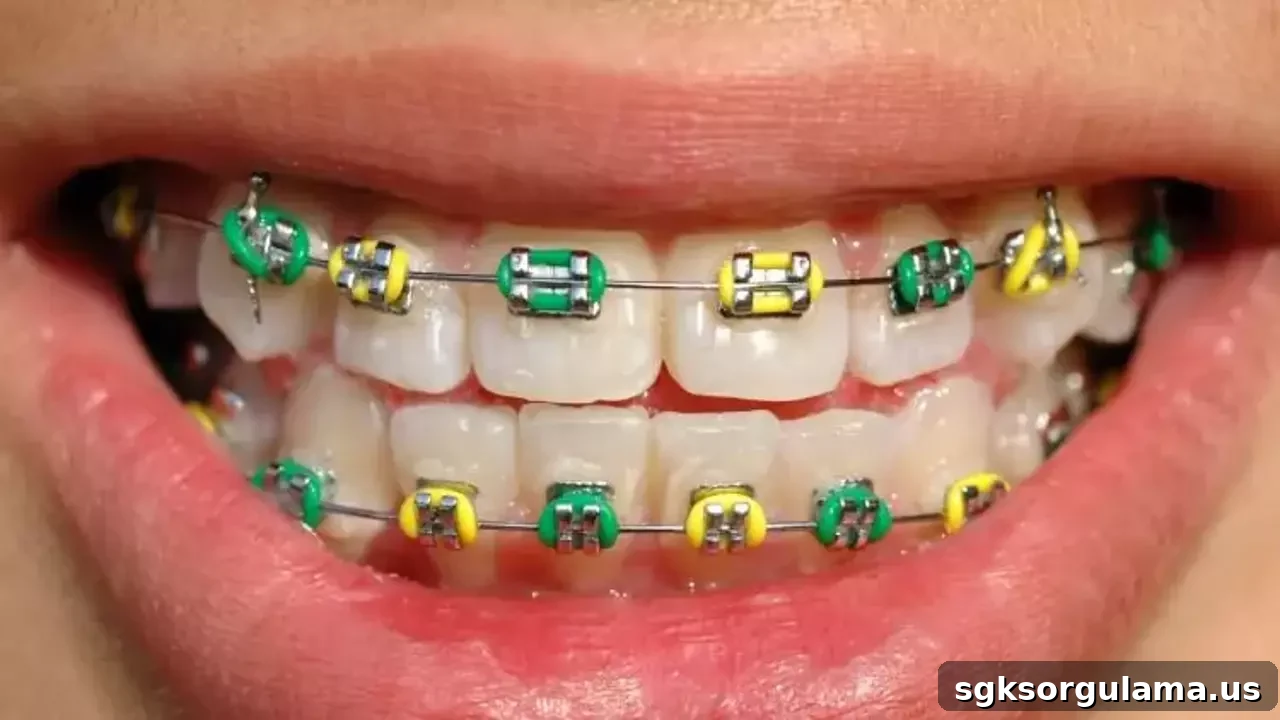
Orthodontic treatment with braces is an important step for those who want to maintain dental and jaw health, achieve a more aesthetic smile, and improve chewing function. High treatment costs often lead patients to seek alternatives. One frequently asked question is what kind of support the Social Security Institution (SGK) provides for orthodontic treatments and under what conditions.
Below we explain in detail the scope of SGK support for braces, who can benefit, application requirements, and what portion of costs are covered. We also clarify current pricing, which treatments and materials are included, and other key points to help you understand the practical implications.
Does SGK Provide Support for Braces?
SGK can provide financial support for braces under certain conditions. The scope of coverage depends on critical factors such as age limits, the type of health institution where treatment is provided, and the medical necessity of the procedure.
Who Can Receive SGK Support for Braces?
- Patients under 18 years of age,
- Those treated at state or university hospitals,
- Cases where a physician deems braces medically necessary,
- Individuals who are dependent on a parent with social security coverage.
SGK does not provide braces support for patients over 18. Individuals in that age group must cover all costs themselves at state hospitals or private clinics.
Which Treatments Are Covered by SGK?
SGK typically covers costs for classic orthodontic treatment performed with metal braces. New-generation or aesthetic options such as clear aligners, lingual braces, and aesthetic brackets are not covered by SGK.
Types of Treatments SGK Covers
- Fixed metal braces
- Medically necessary treatments for jaw and tooth misalignments
- Patients with developmental or pathological disorders of the jaw structure
Note: Procedures performed solely for aesthetic reasons are not covered by the state.
How Much Does SGK Cover? (Cost Details)
SGK does not cover the entire cost of orthodontic treatment. Usually the material costs are covered by the institution, while some fees and various expenses during the treatment process remain the patient’s responsibility.
What SGK Pays For
- Material costs: Brackets, wires, and elastics are covered by the state.
- Labor and procedural fees: Examinations, X-rays, impressions, check-ups, and maintenance appointments are typically paid by the patient.
- Extra devices and special applications: Clear aligners and lingual braces are entirely at the patient’s expense.
- Full coverage situations: In state hospitals, for patients under the age limit and with a physician’s medical justification, materials are provided free of charge.
Some sources indicate SGK may cover only around 50% of certain treatment costs, meaning that items beyond basic materials are often paid by the patient; additional services and external applications may fall outside SGK coverage.
Conditions to Receive SGK Support for Braces
To benefit from state support, these conditions generally must be met:
- The patient must be under 18 years old.
- Examination and treatment must take place at a state or university hospital.
- A physician must issue a necessity report.
- The patient must be covered by social insurance (for example, as a child of an insured worker, civil servant, or pensioner).
- There should be a medical necessity such as jaw or palate anomalies or severe crowding.
Aesthetic-only treatments do not receive a report and are not eligible for SGK support. When a medical necessity report is issued, the process can proceed.
Situations Not Covered by SGK and Private Options
Certain treatment types and special requests remain outside SGK coverage:
- Clear aligners: No state support is provided.
- Lingual braces: These are offered entirely at private expense.
- Applicants over 18: All costs must be paid by the individual.
- Private hospitals and practices: SGK payments do not apply.
Supplementary private health insurance may partially cover costs in some clinics, but this does not equate to SGK support.
Steps to Obtain Braces with SGK Support
The typical steps to receive state-supported orthodontic treatment are:
- Apply to an oral and dental health center.
- An orthodontist examines the patient and prepares a report if necessary.
- Collect documents proving you are under 18 and covered by SGK.
- Make an appointment and complete registration for treatment.
- Brackets and orthodontic materials are supplied by the state.
- Attend appointments on schedule throughout the treatment.
- Some additional checks, X-rays, and tests may incur fees.
Waiting times at some hospitals can range from several months to a few years due to high demand. Applying early is advantageous.
2025 Braces Prices and SGK Coverage
Braces fees vary depending on materials, application method, and the status of the hospital. Current estimated price ranges for 2025 are:
| Treatment Type | Average Price Range (TL) |
|---|---|
| Metal Braces (Single Jaw) | 15,000 – 25,000 |
| Metal Braces (Both Jaws) | 25,000 – 48,000 |
| Clear Aligners | 34,000 – 71,000+ |
| Lingual Braces | 30,000 – 80,000+ |
- At state hospitals, SGK support applies only to metal braces.
- For fee-based treatments, factors such as the orthodontist’s experience, treatment duration, hospital location, and additional procedures affect cost.
Required Documents for SGK Braces Support
- Identification document (national ID card)
- SGK provizyon document or proof of health insurance
- Student document for those under 18 (in some cases)
- Medical report from an orthodontist
- Appointment confirmation
How the Treatment Process Begins
- Initial examination through a family doctor or dental health center,
- Detailed check by an orthodontist,
- Obtain a suitability report for treatment,
- Begin treatment on the scheduled day; planning and material supply are arranged.
How Long Does Treatment Take?
Orthodontic treatment typically lasts between 1.5 and 3 years. Duration varies according to the patient’s age, the severity of the dental issue, and the applied methods. Regular check-ups are essential until treatment is complete.
Additional Costs in SGK Orthodontic Treatment
- X-ray and dental imaging fees,
- Model and impression procedures,
- Examination and follow-up expenses,
- Extra materials used in emergencies,
- Retention appliances after treatment,
- Teeth cleaning and maintenance products.
Some of these costs are not covered by the state and must be paid by the individual.
Waiting Times and Appointment Demand
Scheduling orthodontic appointments at state hospitals can be difficult due to high demand. Waiting times to begin treatment may exceed several months and in some areas can extend to 1–2 years. Starting the process early is recommended.
Key Points to Know About SGK Orthodontic Treatment
- SGK only pays for medically necessary cases for patients under 18; other cases are not covered.
- Treatment must be initiated at a state or university hospital to be eligible.
- Ensure all required documents are complete before starting treatment.
- Aesthetic-only needs do not qualify for state payment.
- Additional payments are required for services beyond basic materials.
Alternatives If SGK Support Is Insufficient
If you prefer not to wait or you are outside the age limit:
- Private clinics may offer personalized pricing and installment plans.
- Private or supplemental health insurance can provide additional payment support in some cases.
- Costs for aligners or aesthetic treatments outside SGK coverage depend on the clinic and chosen approach.
SGK 2025 Updates for Braces Treatment
In 2025 SGK largely maintains existing support conditions. Age limits, material coverage, appointment, and application procedures remain mostly the same, though minor administrative changes may occur. Core criteria include:
- Support for classic metal braces for patients under 18 at state hospitals.
- Confirm current regulations and hospital practices before starting treatment.
- SGK may introduce easier digital applications and system integrations in coming years.
SGK support for braces relieves a significant financial burden for patients under 18, but expenses beyond materials and basic applications remain the patient’s responsibility. To confirm eligibility, consult the orthodontics department of a state hospital before beginning treatment and follow official updates from your health provider to avoid missing any rights or requirements.
Taking the right steps during your orthodontic journey helps protect oral health and avoid unnecessary costs. Wishing you a healthy, confident smile!
Frequently Asked Questions
1. Does SGK cover the entire cost of braces?
No. Typically only material costs (brackets, wires) are covered by SGK. Fees for examinations, imaging, and maintenance are usually the patient’s responsibility.
2. Up to what age can SGK support be obtained?
Patients who have not reached 18 years of age and meet medical necessity criteria may benefit from SGK support.
3. Is the support valid only in state hospitals?
Yes. SGK payments are valid only in state and university hospitals. Treatments performed in private clinics are not covered by SGK.
4. Are clear or aesthetic braces covered?
No. Only classic metal braces are covered by SGK. Clear aligners, ceramic brackets, and lingual systems for aesthetic reasons are fully paid by the patient.