
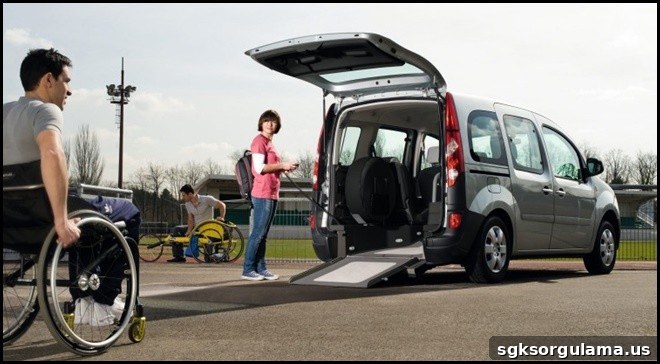
Many positions have been opened in both public and private sectors in our country to help citizens with disabilities reintegrate into society and to demonstrate that their disabilities are not barriers. In addition to employment opportunities, the state provides various social supports—especially in health care—which also benefit the parents and caregivers of people with disabilities. These measures aim to remind disabled individuals that they have their own lives and are valued members of society. Due to illness or disability, some people have withdrawn from social life, avoided education, and minimized their public presence. This approach is mistaken, and both the state and the public have worked to provide and support access to opportunities for people with disabilities.
Recently, as the new year approached, one of the most discussed topics was the series of price increases and tax adjustments. Financial experts warned that Special Consumption Tax (ÖTV) on vehicles would likely rise significantly, prompting many people to buy cars before the changes took effect. Because there have long been special provisions for people with disabilities, disabled buyers followed these developments closely. Experts and informed sources then clarified the situation: there had been no upper price limit on vehicles purchased by disabled people, and no fixed cap on the vehicle’s value for the exemption. Previously, buyers simply had to meet certain conditions to benefit from the rights granted to them and pay taxes accordingly. Below is an updated overview of the Engelli ÖTV İndirimi (Disabled Vehicle ÖTV Exemption).
How Much Is the Disabled ÖTV Exemption?
According to the published communiqué on the ÖTV exemption for vehicle purchases by persons with a disability rate of 90% or higher, the following provisions apply:
– Vehicles classified under tariff position 87.03 with engine displacement of 1600 cubic centimeters or less—including panel vans, passenger cars, SUVs, ATVs, station wagons, off-road vehicles, pick-ups and similar vehicles—are exempt from special consumption tax for their first acquisition if the buyer has a disability rate of 90% or higher.
– Vehicles under tariff position 87.04 intended for carrying goods, with engine displacement of 2800 cubic centimeters or less—including pick-ups, light trucks, panel vans and vans and similar vehicles—are also exempt from ÖTV for the first acquisition by a person with a disability rate of 90% or higher.
– Vehicles under tariff position 87.11, namely motorcycles, are exempt from ÖTV for their first acquisition by a person with a disability rate of 90% or higher, regardless of engine displacement. This exemption applies once every five years.
The exemption does not require the vehicle to have special equipment or that the disabled person personally drive the vehicle.
For vehicle purchases by people whose disability rate is below 90%, there is a specific distinction regarding tariff position 87.11. Motorcycles under 87.11 will be exempt from ÖTV for their first acquisition only if they are specially adapted with movement-assisting fittings appropriate for the disabled person and are intended for the person to use themselves.
Additionally, if a vehicle obtained under the first-acquisition exemption becomes unusable due to natural disasters or incidents such as earthquakes, floods, fires, accidents or landslides and is subsequently scrapped, the person may acquire another vehicle once more without paying ÖTV.
Who Is Eligible for the Disability Tax Allowance?
The disability tax allowance is applied when calculating income tax bases from the salaries of disabled workers. Eligible persons include disabled employees, caregivers who are formally responsible for a disabled individual, self-employed persons who have a dependent with a disability, disabled self-employed persons themselves, and disabled persons who are taxed under the simple tax regime.
Where to Apply for the Disability Allowance?
To benefit from the disability allowance, applications should be submitted to the Revenue Administration directorates located in provinces where such directorates exist. In provinces without a dedicated directorate, applications should be made to the local fiscal offices (Defterdarlık).
In districts with independent tax offices, applications must be made at the Tax Office Directorate. In other districts, applicants may apply at the local Finance Directorates (Malmüdürlükleri).