
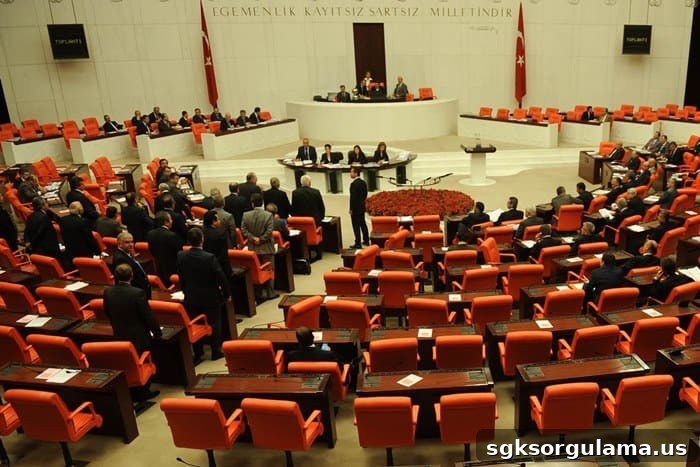
The government has submitted a new 62-article bill to Parliament. Prepared under the coordination of the Ministry of Treasury and Finance, this bill contains measures intended to benefit all citizens. The package, now before the legislature, is presented as having provisions that will apply nationwide and aim to ease daily life for Turkey’s 83 million residents.
One of the most notable proposals in the 62-article bill is the removal of income criteria for Home Care Services during extraordinary situations. In emergency circumstances such as widespread infectious disease outbreaks or natural disasters, home care services would be available without regard to a person’s income level or disability status. In necessary cases, individuals may also receive a caregiver payment and social assistance.
Under the proposed rules, households whose per-person income is less than two-thirds of the minimum wage, who meet the criteria for needing care, and who present a health board report indicating severe disability could be eligible for a home care allowance. The draft’s second article states that in extraordinary and emergency situations—such as epidemics, earthquakes, and other natural disasters—the provisions will be applied without taking income into account. When required, elderly citizens can receive home care services and caregiver payments regardless of their financial situation.
Selected Provisions from the Draft Bill Submitted to Parliament
The draft bill, which will be finalized considering proposals from relevant ministries, includes a range of items designed to address social and economic challenges. Some of the key measures planned for inclusion in the omnibus bill are summarized below.
BDDK to Define Remote Contracts;
To allow customers to access banking services without visiting branches during an epidemic, arrangements will enable banks to establish remote contractual relationships. The banking law will be updated to permit distance transactions using communication technologies. The Banking Regulation and Supervision Agency (BDDK) will determine which information technologies and tools are acceptable for forming such contracts.
Use of Public Real Estate;
A force majeure facilitation will be introduced for the use of public real estate. In cases of force majeure like contagious diseases and pandemics, fees related to the use of Treasury properties—including contractual fees and default use charges—will not be collected.
Postponement of Student Loan Payments;
Student loan obligations will be restructured. The Ministry of Youth and Sports will be empowered to reduce amounts by up to half and to postpone payments during periods officially declared as force majeure without applying indexation linked to producer or consumer price indices.
Exemption from Advertisement Taxes;
Annual advertisement and environmental cleaning taxes will be waived for businesses whose activities have stopped or been suspended during the course of a pandemic.
Electricity Debt Restructuring;
Electricity debts will be eligible for restructuring. The first installment of restructured amounts can be postponed until the last day of October 2021, with subsequent annual installment schedules allowing payment in three equal installments during the month corresponding to the first installment each year.
Transfers at Travel Agencies;
Travel agencies will be allowed to transfer their operating certificates to another legal entity. The trade name of a transferred agency cannot be used by another agency for one year, and the transferor will not be issued a new operating certificate for three years.