
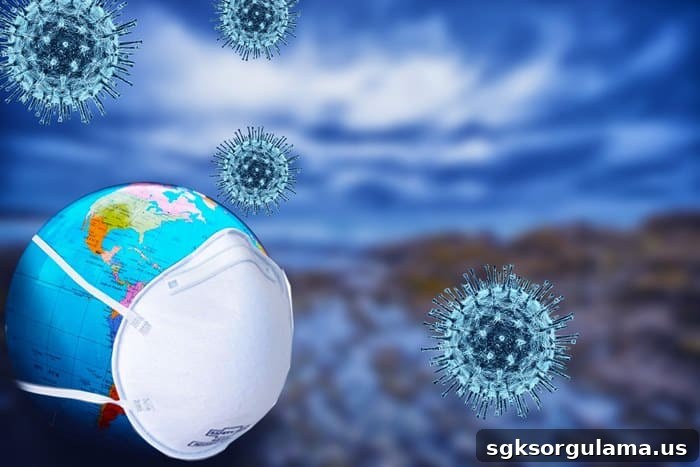
A Promising Breakthrough from Portugal: A Mask That Neutralizes Coronavirus Has Been Developed!
The coronavirus first emerged in China and has since spread worldwide, infecting millions. While health experts have emphasized that a mask alone is not sufficient to fully prevent infection, a recent announcement from Portugal has offered renewed hope globally.
According to information shared by academics in Portugal, research centers and companies have collaborated to produce a mask that reportedly neutralizes the novel coronavirus. The Joao Antunes Institute of Molecular Medicine in Lisbon issued a statement describing the development. The product, marketed under the name MoxATech and available since April, underwent extensive testing and was found to have virus-neutralizing properties. Analyses indicate that the textiles and protective materials used in the mask are capable of inactivating the virus upon contact.
Mask Reduces Viral Activity by 99% After One Hour
Pedro Simas, a virologist at the institute who coordinated the tests, explained that samples of the fabric were exposed to solutions containing the virus and evaluated at intervals to measure viral activity. Even after 50 wash cycles, the mask continued to inactivate SARS and COVID-19. Observations showed that the viral activity decreased by 99% one hour after contact with the mask material.
Prior to the Lisbon institute’s announcement, the Pasteur Institute in Lille, France, also conducted independent tests on the mask materials. Those tests reportedly confirmed effectiveness against H1N1, certain coronavirus strains, and rotaviruses. The mask is designed with a technical fabric that combines multiple layers, is waterproof, and is reusable. The MO brand in Portugal has begun distributing the mask internationally.
This development highlights the potential of advanced textile technology and collaborative research to enhance protective equipment. While masks remain one part of broader infection-control measures, innovations like this may strengthen public health responses and provide additional tools for reducing viral transmission.