

Citizens who owe General Health Insurance (GSS) premiums can easily check their debts online using their Turkish ID number via the e-Devlet portal. GSS debt is a health insurance liability that many people overlook or are unaware of.
You should check and learn your GSS debt, because unpaid amounts accrue interest. The TC ID GSS debt inquiry is performed through the e-Devlet system.
How to Check GSS Debt on e-Devlet
To check GSS debts, citizens can use the e-Devlet system to view outstanding amounts and obtain related documents.
Steps to query GSS debt on e-Devlet:
- Open your browser and go to turkiye.gov.tr.
- Click the “Giriş Yap” (Sign In) button on the page.
- Log in with your Turkish ID number and e-Devlet password.
- After signing in, use the search box that says “Merhaba, size nasıl yardım edebilirim” and type “GSS Tescil ve Prim Borcu Sorgulama”.
- If a debt exists, the resulting screen will display your GSS debt details.
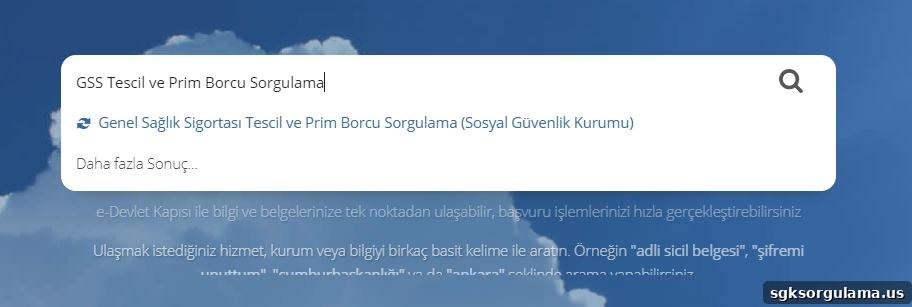
Following these steps lets you query your GSS debt on e-Devlet and download any necessary documents from the system.
How to Check GSS Debt by Phone
If you prefer not to use the internet, you can inquire about your GSS debt by phone. This option is helpful for people who find online services difficult.
To check GSS debt by phone:
- Call the Family, Labour and Social Services contact center.
- Dial 170 on your phone and place the call.
- The ALO 170 line belongs to the Family, Labour and Social Services Ministry and can provide assistance with GSS matters.
Those checking GSS debt by phone should follow these steps to get the information they need.
What Is GSS Debt?
General Health Insurance (GSS) ensures access to health services for Turkish citizens. Up to age 18, individuals are covered by their families; once they exceed 18 and are not covered by another insurance, they must pay GSS premiums themselves.
If GSS premiums are not paid, the person is considered indebted and cannot fully use certain health services. GSS is mandatory for everyone, so each Turkish citizen is responsible for paying applicable premiums.
Adults over 18 without another insurance need to pay their own GSS premiums. Employed individuals covered by workplace insurance do not pay GSS premiums personally while they are insured; their premiums are paid by their employer. GSS became mandatory under Article 60 of Law No. 5510, effective January 1, 2012.
Payment rules by student status:
- High school students can receive GSS coverage until age 20.
- University students can receive GSS coverage until age 25.
Beyond these student exceptions, adults without school enrollment or employment begin to accumulate GSS premium debt. If payments are delayed, the debt accrues interest. Anyone who wishes to use health services should check their debt status and start payments promptly.
How to Pay GSS Debt
After checking GSS premium debts on e-Devlet, debtors will want to know available payment methods and where to pay. There are several ways to pay GSS premiums.
Banks that cooperate with SGK where you can pay GSS premiums include:
- Akbank
- Alternatif Bank
- Albaraka Türk Katılım Bankası
- Aktifbank
- Anadolu Bank
- Citibank
- Denizbank
- Finansbank
- Fibabanka
- HSBC Bank
- Halk Bankası
- ICBC Turkey Bank
- ING Bank
- İş Bankası
- Kuveyt Türk Katılım Bankası
- Odeabank
- Şekerbank
- Türk Ekonomi Bankası
- Yapı ve Kredi Bankası
- Burgan Bank
- Ziraat Bankası
You can pay your GSS debts in full or arrange installment plans through these banks, often via their mobile banking apps if you are a customer.
ATM payments:
- You can make cardless payments at the ATMs of the bank where you are a customer.
- Choose the “SGK Payments” menu on the ATM screen.
- Select the GSS Premium Payments option and enter your ID number to complete the payment.
You can also pay GSS premiums by credit card via the SGK payment portal. To do so via e-Devlet:
- Sign in to turkiye.gov.tr.
- Search for “Sosyal Güvenlik Kurumu Kart ile Prim Ödeme Uygulaması”.
- Authenticate with your ID number and e-Devlet password.
- After logging in, open the payment menu.
- Select “DİĞER Tahsilatlar” as the query type.
- Choose the GSS Premium option and enter your card information to pay.
- Cardholders may only pay their own debts with their card; one person cannot use their card to pay another person’s debt.
PTT is also an SGK-approved institution. To pay at a PTT ATM, choose the SGK Payments menu, enter your ID number, and complete the payment.
How to Restructure (Yapılandırma) GSS Debt
People with GSS premium debts can apply for restructuring to pay either in full or in installments. Debts are adjusted using the annual Domestic Producer Price Index (Yİ-ÜFE).
What Happens If GSS Premiums Are Not Paid?
GSS is mandatory in Turkey. Those required to pay premiums must do so—either their employer pays while they are insured, or they pay personally if uninsured. Unpaid GSS premiums begin to incur interest.
Once the initial GSS premium payment has been made, subsequent monthly payments must follow. If months are missed consecutively, debts grow with interest and are carried into subsequent months.
If debts remain unpaid, the administration will issue warnings and may proceed to enforcement and garnishment for those who do not respond.
How to Apply for GSS
To benefit from GSS, applicants must follow a set of steps. Typical application requirements include:
- Visit the district governor’s office (Kaymakamlık) affiliated with Social Services.
- Request the GSS Application Form at the Kaymakamlık.
- Obtain a poverty certificate (fakirlik belgesi) from your local mukhtar’s office if required by your situation.
- Provide your ID and photocopy of your ID.
- Include ID photocopies of dependents if applying on behalf of them.
- Bring a current income test document if applicable.
- Provide a residence address registration document for where you live.
- Submit proof of monthly income for those with earnings.
- Provide documentation of the latest SGK premium payment if you have been paying premiums.
- Submit proof of assets for those with declared property.
- Provide an updated disability ID card for disabled applicants.
- Veterans should submit their gazi certificate and related documents for close relatives if required.
How GSS Premium Debt Is Calculated
Late payment interest on GSS premiums is calculated using the Domestic Producer Price Index (Yİ-ÜFE). The Yİ-ÜFE adjustment determines the current amount of outstanding premium debt.
GSS Debt Restructuring Options
Available options for restructuring GSS debt include:
For lump-sum (peşin) payments:
- No late payment interest is charged.
- No penalty fees apply.
- Paying in full may result in a significant reduction in the Yİ-ÜFE-adjusted debt.
For installment payments:
- Debts paid in two installments under Yİ-ÜFE adjustments may benefit from reductions.
- Installment plans can typically be arranged for 6, 9, 12, or 18 months.
How to apply for restructuring:
- Individuals should manage their restructuring through the e-Devlet system.
- Employers should use the e-Sigorta system to restructure employer-related debts.
Which Hospitals Accept GSS?
GSS beneficiaries often ask which hospitals are covered. GSS generally applies at:
- State hospitals
- University hospitals
Does GSS Cover Private Hospitals?
Current regulations generally limit GSS-covered services to state and university hospitals. As of the latest widely available guidance, private hospital coverage under GSS is restricted and not generally available for routine services.
How to Do the GSS Income Test
Those who want GSS benefits typically must complete a household income test. Key points of the income test:
- The household composition and ages of members determine eligibility; people over 25 are generally not included in the household calculation.
- Classification into G0 or G1 groups depends on the income test result.
- For men over 25, GSS obligations start regardless of marital status.
- Household per-person income is compared to a fraction of the minimum wage; if it falls below one-third, the household may qualify for G0 (exempt from premiums).
- If per-person income exceeds one-third of the minimum wage, the household may be classified as G1 and required to pay premiums.
When Does GSS Start?
GSS premiums usually become the individual’s responsibility at age 18. Until then, individuals are typically covered as dependents by their family. High school students are covered until age 20 and university students until age 25.
When a person gains employment and becomes insured under 4A coverage, the employer pays GSS premiums for the insured period. If insurance coverage ends, continued access to GSS services depends on the length of prior insured employment:
- Those insured for less than 30 days continue to receive free GSS services for 10 days after employment ends.
- Those insured for 90 days or more continue to receive free GSS services for 100 days after employment ends.
How to Cancel GSS
GSS covers everyone, but certain situations remove the obligation to pay premiums or change coverage status, such as:
- Being insured under 4A, 4B, or 4C schemes
- Receiving an old-age pension
- Being granted veteran status
- Not being registered under any social security scheme
This article explained in detail how to check GSS debt with a Turkish ID number and the most common related procedures.
Can Those Who Receive No Health Assistance Object to GSS Debt?
GSS past-due debts can be assessed even if the person did not receive health services from SGK during the relevant period. Simply not receiving health assistance is not a valid automatic ground for objection.
The monthly GSS amount set for regular payment is subject to change; timely payment is recommended. If a valid reason is accepted by SGK during an objection, the debt may be waived.
Reasons for Past-Period GSS Premium Debts
GSS became compulsory on January 1, 2012. Except for those in exempt groups, everyone must pay. Persons registered under relevant provisions must pay their monthly premiums after registration. Those who fail to pay for more than two months cannot receive health assistance until the debt is cleared.
What to Do If Past-Period GSS Premium Debt Appears
Options after finding a GSS debt include:
- If you believe the debt is incorrect, you may file an objection.
- You may apply for an income test to seek exemption from GSS premiums.
- You may pay the outstanding amount either in full or by installment.
How to Object to Past-Period GSS Premium Debt
To object to a GSS premium debt, a specific justification is required. You can submit a written objection to the relevant Social Security Directorate. The objection may be submitted to the office that issued the notification or to another directorate; the reason for the objection must be clearly stated in the petition.
Valid Grounds for Objecting to Past-Period GSS Debt
Valid reasons for objecting to a past-period GSS debt may include:
- If, during the period in question, the person was actually eligible for health services as a dependent of someone else, the debt can be contested.
- Service periods during mandatory military service for men are covered by the state, so related debts can be objected to.
- If the person was abroad during the period but still appears in the national registry as residing in Turkey, resulting debts can be challenged.
- Unemployment benefit recipients have their GSS payments covered by İŞKUR for that period, so related debts may be objected to.
- If reported insurance days are fewer than 30 for people who should not have a 30-day requirement, debts based on underreported days can be contested.
- Monthly pension recipients should not be charged GSS debt for periods covered by the pension.
- Those employed in their own social security fund institution should not have GSS debts.
- Debts resulting from system errors can be objected to and corrected.