
Considering the changing world order and the steadily growing population, transportation has become one of the most significant challenges. As the value of time increases, speed of travel from one place to another becomes crucial. Minutes or even seconds lost translate into financial costs; in a globalized world, the effects of time differences and rapid movement make speed and efficiency in transportation essential. Within this context, people’s needs and preferences have shifted, and vehicle ownership has risen. The growing number of vehicles driven by a swelling population has brought traffic into focus; as traffic becomes a daily reality, its management takes on vital importance. The primary reason traffic is so critical is that, when it flows without order, it causes both material and emotional losses. People who organize life on land must also respect order when using transportation.
One of the main problems in traffic flow is the concept of right-of-way. A significant portion of traffic disruption stems from failures in applying right-of-way rules. Especially in urban areas and on short trips, unresolved right-of-way issues lead to serious problems. Below, we explain the traffic right-of-way rules and the types of vehicles that are granted priority.
Traffic Right-of-Way Rules
Before examining right-of-way rules in detail, it is important to identify the vehicles that have priority in traffic. These vehicles are granted priority to protect public order, ensure safety, and provide medical care. The vehicles and their roof lamp colors are as follows:
1. Ambulances, Specialized Rescue Vehicles, and Medical Transport for the Injured or Critically Ill
Roof Lamp Color: Blue-Red or Blue
2. Emergency Response Vehicles
Roof Lamp Color: Red
3. Law Enforcement Vehicles Responding to Incidents or Pursuing Suspected Offenders
Roof Lamp Color: Blue-Red or Blue
4. Vehicles Heading to an Incident or Accident to Maintain Traffic Safety or Secure an Accident Scene
Roof Lamp Color: Blue-Red or Blue
5. Vehicles Assigned to Snow and Ice Control
Roof Lamp Color: Blue
6. Civil Defense Vehicles When Activated During an Alarm
Roof Lamp Color: Red
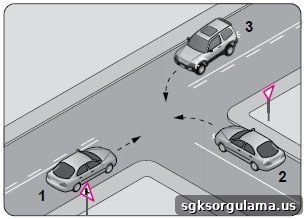
The priority assigned to these vehicles is intended to preserve public order and support emergency medical services. In everyday traffic, the places where adherence to right-of-way rules matters most are intersections. A large share of traffic accidents that produce material and moral losses occur at intersections because rules are overlooked or not followed carefully. Under the concept of traffic right-of-way, the following rules should be observed at intersections:
- Vehicles with legal right-of-way must be yielded to according to traffic regulations.
- Trams in motion always have priority when their right-of-way applies.
- When moving from a divided road, drivers must yield to vehicles already traveling on that road.
- Vehicles entering a main road from a side road must yield to traffic on the main road.
- Vehicles entering an intersection must yield to vehicles already in the intersection.
- Non-motorized vehicle drivers must yield to motorized vehicles when appropriate.
- Tractors and roadwork machinery should yield to other traffic unless specific rules or temporary signs state otherwise.
- In general traffic flow, a vehicle on the left should yield to a vehicle approaching from the right when applicable.
- Where pedestrian crossings or pedestrian movement are involved, vehicles entering or passing through intersections must yield to pedestrians, provided the pedestrians are using appropriate crossings or moving in a lawful manner.
Even when a driver legally has permission to proceed, it is forbidden to enter an intersection if the vehicle will obstruct traffic flow or block the intersection. Any action that creates immobilization at an intersection—such as turning off the engine, leaving the vehicle unattended, or similar behavior—is prohibited while traffic is moving. The privileged vehicles listed above retain their right-of-way regardless of whether they are at an intersection or elsewhere, and other drivers are required to yield.
Right-of-way in traffic is a fundamental part of traffic law and a matter of public safety. Respecting priority rules prevents damage and loss, protects the lives and property of everyone on the road, and ensures that emergency and public-safety vehicles can perform their missions effectively. Every driver must understand and follow these rules, both to comply with the law and to safeguard themselves and others.