
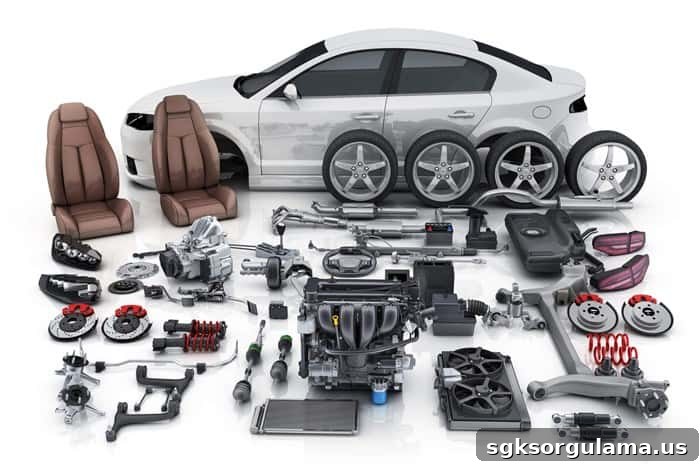
VIN-based parts lookup provides access to many important details such as expert reports, lists of compatible replacement parts, and other vehicle-specific information. The chassis identifier known as the VIN (Vehicle Identification Number) is the serial code tied to the vehicle’s structural frame. Internationally recognized as VIN, this 17-character code encodes the country of manufacture, factory, engine type, body type, model year and the sequential production number from the factory. The VIN is stamped onto the engine block and the vehicle frame during manufacturing.
Although commonly called a chassis number in some contexts, the modern VIN system replaced older proprietary chassis numbering schemes. Since 1981, following EU regulations, manufacturers adopted the standardized VIN. Previously, each manufacturer used its own chassis numbering conventions, often engraved on the vehicle’s frame. Many passenger cars produced since the 1930s no longer use a separate ladder-frame chassis; they rely on a self-supporting body structure, while traditional chassis numbering remains more common on commercial vehicles and motorcycles.
By performing a parts lookup using the VIN, you can find the spare parts that best match the vehicle’s structure and learn about their availability. The VIN also allows queries into the vehicle’s history, including replaced parts and accident records.
How to Find a Vehicle’s VIN
You cannot generally retrieve a VIN through anonymous online queries. To learn a vehicle’s VIN, inspect the locations where the number is marked. The universally valid VIN appears on the vehicle itself and on official documents related to the vehicle. Marking the VIN on the vehicle ensures the identity remains verifiable regardless of incidents. With the VIN, you can obtain information such as engine details, production year, frame data and the vehicle’s service and accident history from anywhere in the world.
What Do the Letters and Numbers in a VIN Mean?
The letters and digits in a VIN follow a standardized system designed to convey key details about the vehicle. The VIN is a 17-character international serial number. Two main regional conventions exist: one used by manufacturers in European Union countries and another by North American manufacturers. The typical structure of the 17-character VIN is:
1–3: World Manufacturer Identifier (WMI). These codes are assigned to vehicle manufacturers—examples include WOL for Opel/Vauxhall, WF0 for Ford, or WVW for Volkswagen.
4–9: Vehicle descriptor section determined by the manufacturer. Unused positions are filled with letters or numbers; for example, some makers use “0000” for unused positions.
10: Model year code, defined by ISO 3779. Characters map to years starting from 1971. To avoid confusion, I, O, Q, U and Z are not used in year encoding.
11: Plant code identifying the specific production facility.
12–17: Sequential production number that increases by unit.
Where Is the VIN Located on the Vehicle?
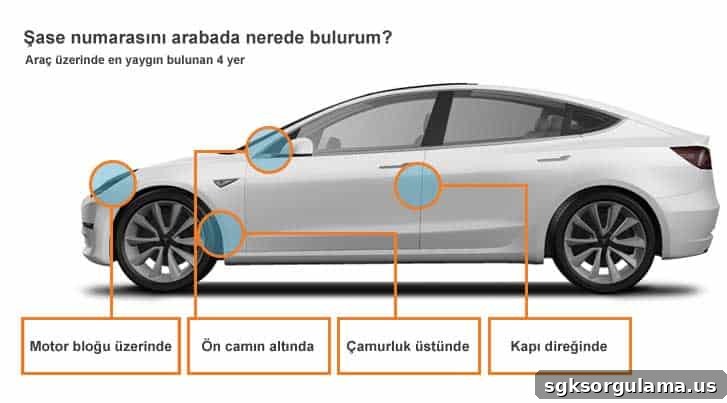
VIN locations vary because the VIN serves as the vehicle’s definitive identifier and must remain discoverable after collisions or other incidents. To ensure durability and visibility, VINs are stamped in several secure places. Typically the VIN is pressed into the engine block and the vehicle frame.
Other common VIN locations include:
- The vehicle registration document lists the VIN next to the corresponding heading.
- If the vehicle has no registration document, the VIN may appear on the insurance policy.
- Stamped on the engine.
- Under the hood (on the firewall or strut tower).
- On the driver’s side door jamb or inner door panel.
- On a plate near the license plate holder.
- Inside the wheel well.
- Under the trunk floor.
- Beside the spare tire compartment.
What to Do If the VIN Cannot Be Read
An unreadable VIN is grounds for failing a vehicle inspection. If the VIN is not legible, you should visit authorized service centers that are licensed to verify and, when appropriate, reapply the VIN marking. At these centers, the VIN is first identified and then re-stamped onto the engine or frame using specialized equipment. Even if the VIN is known in documents but the physical marking on the vehicle is unreadable, the vehicle may still fail inspection. It is necessary for the vehicle’s identity to be verifiable without the owner present, so an authorized service must restore the VIN markings.
How to Obtain a New VIN Marking
A new VIN marking is applied only when the original VIN cannot be determined from the vehicle. If a vehicle has been rejected at inspection for an unreadable VIN, the owner should schedule an appointment with the relevant engineering chamber (MMO) or the appropriate authority. On the appointment day, the vehicle is inspected and any required fees paid. With an MMO report, you obtain notarized approval. Presenting the notarized MMO report to a service authorized to reapply VINs allows the VIN to be restamped and documented.
This procedure exists to prevent tampering and theft. The factory-assigned VIN is the vehicle’s lifelong identity. Allowing the VIN to be changed freely would create a security gap that criminals could exploit, so MMO reports and notarized approvals are required for any VIN reapplication.
How to Lookup Spare Parts Using the VIN
A VIN-based search is used primarily to locate compatible spare parts. Parts retailers and manufacturers provide search fields where you enter the VIN. Based on the vehicle type, engine, production site and other encoded data, the system lists parts that precisely match the vehicle. During this process you can also check a supplier’s stock status and whether out-of-stock parts can be ordered.
How to Check Damage Records by VIN
Damage history lookups by VIN can be performed using approved SMS services in some regions. Sending a message to the designated short code can return details such as replaced parts, reasons for part replacement, and recorded accidents. This service is typically run in cooperation with major mobile operators and requires sending a correctly formatted SMS that includes a command, the VIN and the date of interest. For example, specific keyword formats are used to request parts or damage history for a given date.
Beyond parts history, a VIN-based inquiry can reveal a wide range of vehicle information: make and model, whether the license plate has changed, provinces where the vehicle has been registered, changes in vehicle category, duration of ownership, presence and duration of active insurance (comprehensive), initial entry into traffic, total insured and uninsured periods, and more. Knowing the VIN is sufficient to retrieve these details from authorized services and records.